Bouncer and Babywearing: Building Your Routine
By Priya Menon • 2nd May

For parents navigating small living spaces, bouncer babywearing integration isn't a luxury. It is a pragmatic necessity. Many first-time caregivers assume these tools compete for floor space and attention. In reality, when paired thoughtfully, a bouncer and a carrier form a complementary rhythm that conserves space, reduces decision fatigue, and builds sustainable daily routines. This guide explores how to layer these tools safely and intentionally, anchoring your practice in evidence rather than marketing promises.
FAQ
Q: Aren't a bouncer and a carrier doing the same job? Why do I need both?
A: They serve different functions, and their strengths are mutually reinforcing. Babywearing keeps your hands free while allowing tactile contact and movement (ideal for cooking, tending to a sibling, or taking the stairs). A bouncer offers hands-free engagement without physical contact, which lets you step away briefly, shower, make a call, or simply sit nearby while the baby settles. Neither is a sleep surface; both are tools for alert time or supervised drowsiness during waking hours. In small homes especially, a compact bouncer eliminates the need for a crib bassinet and a swing, so you gain functional variety without doubling your footprint. For activity-by-activity tradeoffs, see our bouncer vs carrier guide.
Q: How do I schedule bouncer and carrier use so the baby doesn't get confused?
A: The key is consistency through variety. Many parents find success with a bouncer and carrier schedule that alternates based on the task at hand, not arbitrary time slots. For example:
- Morning routine: Babywearing while preparing breakfast (15-20 minutes).
- Mid-morning wind-down: Bouncer while you shower or respond to emails (short, supervised stints, typically 15-30 minutes).
- Afternoon engagement: Babywearing on a neighborhood walk or errand run (30-45 minutes).
- Late afternoon: Bouncer during meal prep if the baby is fussy (short, supervised stints).
Babies quickly learn that different settings correlate with different activities, not abandonment. What matters is responsiveness and routine, not the device itself.
Q: How do I keep my tiny apartment from feeling overrun by gear?
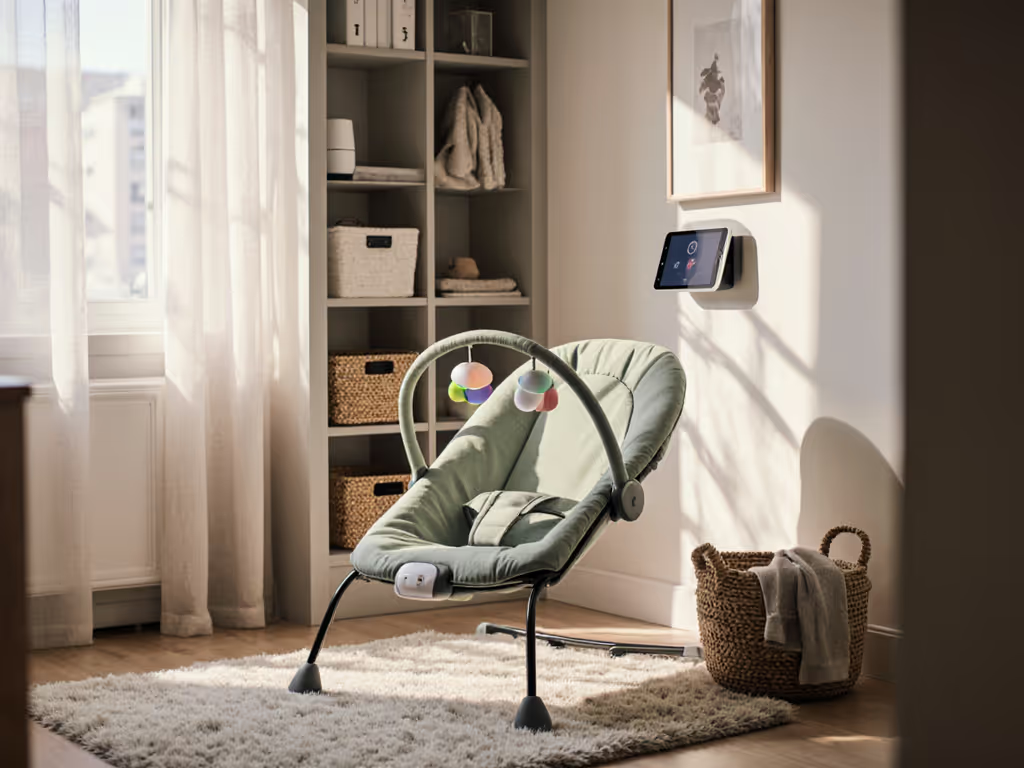
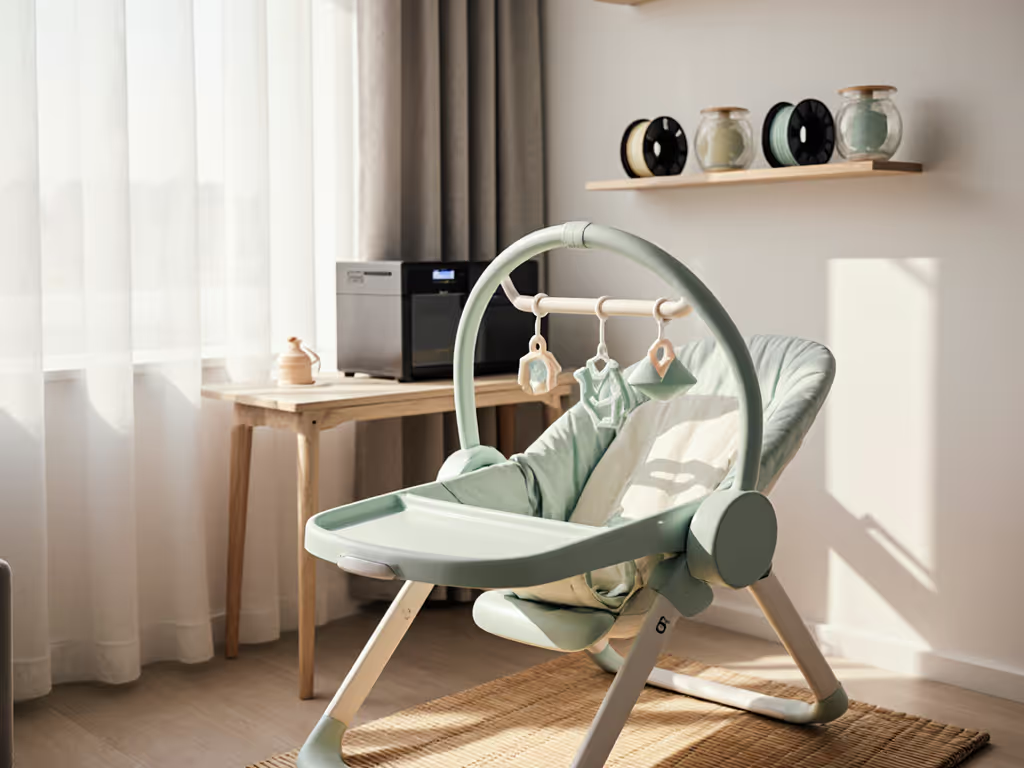
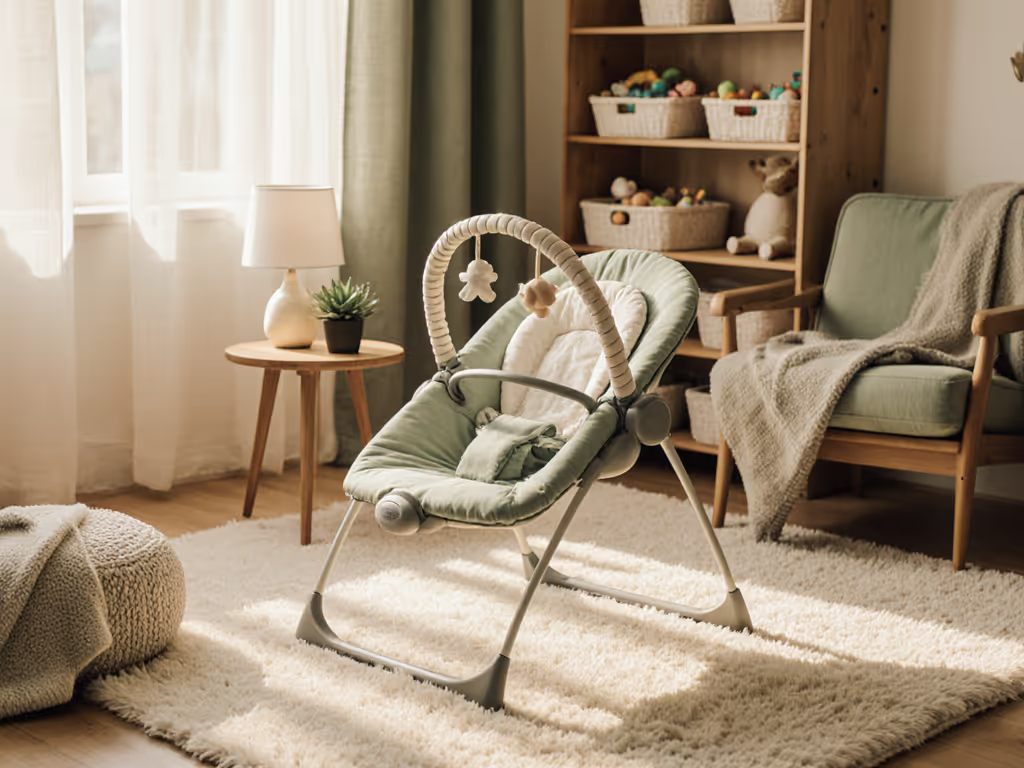
A: This is where intentional selection matters. Choose a compact, fold-flat bouncer that stashes behind a door, under a bed, or on a shelf when not in use. For layout ideas and model types, start with our space-saving bouncer overview. Many options have a footprint smaller than a vacuum cleaner. In contrast, a well-fitted baby carrier (whether soft-structured or a wrap) occupies almost no permanent space once worn or hung on a hook. The combination actually reduces clutter compared to a swing, stationary bassinet, and rocker all taking up floor real estate. The aesthetic payoff is significant: a minimalist neutral bouncer and a calm-toned carrier don't visually compete with your adult furnishings.
Q: What does safe transition between baby gear actually mean?
A: Safe transition between baby gear centers on three practices:
- Correct positioning: Your bouncer should have a recline angle that supports the baby's airway (never flat or semi-reclined on a soft mattress). A babywearing carrier should position the baby's chin off the chest, face visible, and head supported in a kiss-proof posture.
- Supervised use: Never leave an infant unattended in a bouncer, even for seconds. Babywearing requires presence too, but the baby is with you, reducing monitoring anxiety.
- Clear time boundaries: Use a timer for bouncer sessions (standard guidance suggests no longer than 30 minutes per session, and only during alert or light-sleep states). Babywearing can extend longer but should also respect postural load; rotate sides or switch to a bouncer periodically if strain builds.
For step-by-step visuals, see our proper infant bouncer positioning tips. The transition between tools is seamless: move the baby slowly, support the head and neck, and allow a few seconds for the baby to adjust to the new surface or carrier feel. Abrupt switches can startle, so a gentle rhythm matters.
Q: Will my baby resist the bouncer if I babywear most of the time?
A: Some babies prefer constant contact, others welcome bouncer time. Rather than fear resistance, reframe it: success with a babywearing-and-bouncer routine means matching the tool to the mood and task. A baby who fusses in a bouncer during a hungry or overtired window will resist no matter the setup. Conversely, a settled, fed baby often sways contentedly in a gentle bounce while you prepare lunch nearby. The goal isn't 50/50 time split; it's finding your sustainable rhythm. I've counseled parents who worried they "must" use both equally, then abandoned one out of guilt (until we timed a routine together and discovered their natural rhythm). Use whichever tool serves the moment and the goal: freedom to shower, meal prep, a walk, or just a moment of respite. Safety and routine matter more than perfect balance.
Q: Is there a risk of positional issues if my baby spends time in both a bouncer and a carrier?
A: When both tools are used correctly (a bouncer with proper recline and a carrier with correct baby positioning), there's no documented risk of harm from varied positioning during awake time. In fact, variety is developmentally healthful; babies benefit from changing perspectives and postural engagement. What matters is avoiding prolonged time in any single posture. If your baby spends six hours reclined in a bouncer, yes, that's a concern. If your baby alternates between short bouncer stints, babywearing, floor play, and supervised tummy time, postural variety supports healthy development. The common thread is intentionality: track time and adjust if one device dominates the day.
Q: How do I clean a bouncer and carrier without falling apart?
A: Look for complementary infant seating gear with fully removable, machine-washable covers. Most reputable bouncers offer this; expect a 15-minute removal and a gentle-cycle wash. Frames are wipeable with a damp cloth. For a complete routine, use our baby bouncer cleaning guide. Carriers vary: soft-structured carriers often have removable inserts and washable straps, while wraps are typically fully washable. Build a rotation: if one cover is drying, the other is ready. A spray bottle with plain water or mild detergent handles immediate spit-up or spills without waiting for full laundering. Fabrics labeled stain-resistant or quick-dry (often poly-blend rather than 100% cotton) reduce drying time significantly. In small homes where humidity and drying space are tight, this practical detail matters as much as design.
Q: What certifications or safety features should I prioritize?
A: Prioritize:
- JPMA or ASTM certification (for bouncers): independent testing for safety and stability.
- Stable, low center of gravity with non-slip feet to prevent tipping.
- Secure harness (typically three-point or five-point) that you can tighten properly.
- Breathable materials: mesh backing or airflow-conscious design to reduce overheating risk.
- Clear age and weight ranges on packaging and in the manual.
- Manufacturer recall database checks (set a reminder to verify any product isn't under recall). Use our CPSC recall check guide to verify your model.
For carriers, ensure there's no independent evidence of falls or positional asphyxia, and confirm the manufacturer offers guidance on height/weight limits and correct chin-to-chest positioning.
Safety lives in routines, not marketing claims or modes.
A bouncer with extra lights and sounds isn't safer than a quiet, stable one; it's often noisier and more visually distracting, exactly what small-home families are trying to avoid.
Summary and Final Verdict
Bouncer and babywearing integration works best when framed not as either/or, but as sequence and fit. For parents in small spaces with high sensory sensitivity and limited storage, this pairing reduces clutter while providing functional flexibility. Build your routine around tasks and baby cues (babywearing for errands and cooking, short, supervised stints in a bouncer for showers and emails) rather than fixed time quotas. Prioritize bouncers with minimal footprints, washable covers, and quiet operation. Choose carriers that feel secure and don't strain your back or shoulders.
Let safety anchor your choices: correct positioning, supervised use, and clear time boundaries matter far more than features or aesthetics. When practiced intentionally, these tools become habits rather than sources of stress. You'll find rhythm, conserve space, and move through the day with fewer decisions about which device goes where. That calm, evidence-based approach (routine over novelty) is where genuine confidence lives.