
Infant Bouncer vs Carrier: Activity-Specific Gear Guide
By Priya Menon • 2nd Dec
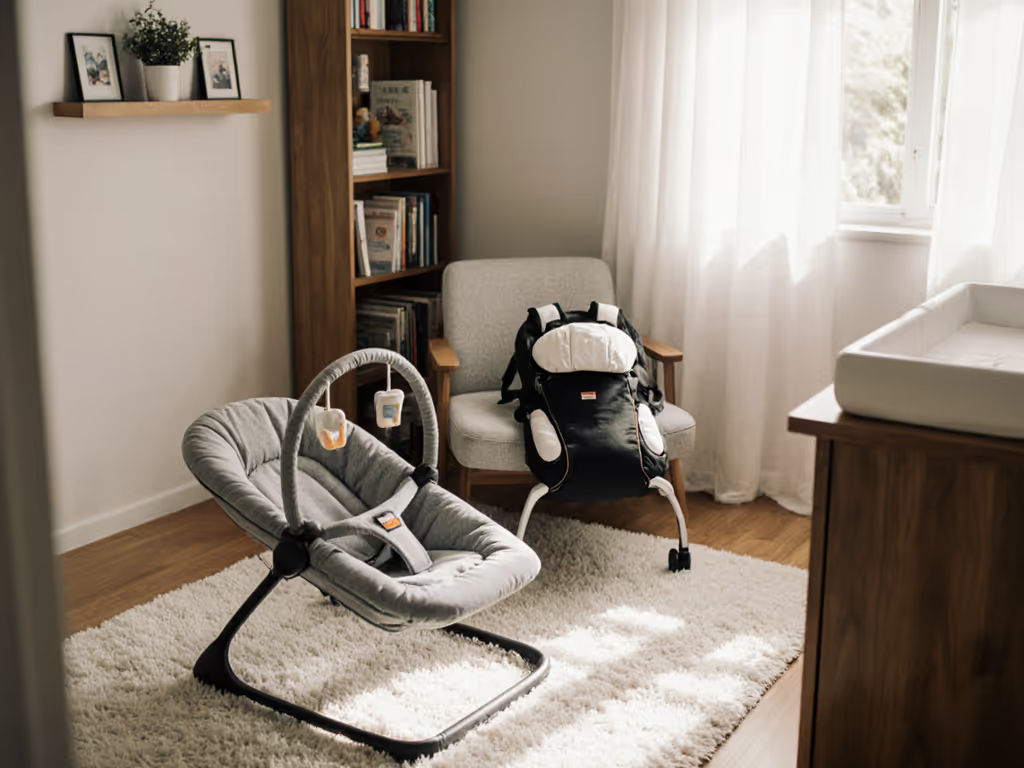
Urban living with an infant presents unique challenges when it comes to baby gear selection. With limited square footage and mounting safety concerns, the question of choosing between a bouncer infant seat versus a carrier becomes less about preference and more about strategic, activity-specific baby gear planning. This guide cuts through the marketing noise to provide evidence-based recommendations for parents navigating cramped apartments, shared living spaces, and the relentless reality of newborn care.
As a parent educator who has translated infant seating research into practical safety checklists for over a decade, I've observed how space constraints amplify decision fatigue. Safety lives in routines, not marketing claims or modes. When you understand precisely what each piece of gear does best, and how to integrate it into your actual daily flow, you transform overwhelming choices into confident decisions. This isn't about buying the most expensive item; it's about creating systems that support your family's specific rhythm.
Frequently Asked Questions: Understanding the Activity-Specific Approach
Q: What fundamentally differentiates a bouncer infant seat from a carrier in terms of infant development and safety?
A: The distinction lies in purpose-driven design rather than physical appearance. Bouncers are stationary activity centers that provide controlled movement within a fixed location, while carriers are designed for mobility while maintaining ergonomic positioning. From a developmental perspective, bouncers offer floor-time positioning that supports hip development in the optimal "M-position" when properly designed, while carriers facilitate upright positioning that strengthens neck control and provides vestibular input through natural caregiver movement. For a deeper dive into the developmental benefits of bouncers, see our evidence-based overview.
Crucially, both require correct usage protocols. The American Academy of Pediatrics emphasizes that no inclined seating device should be used for sleep, a fact confirmed by Sudden Infant Death Syndrome prevention guidelines. When positioning your infant, remember that safety scales with habit, and that consistent, evidence-based routines matter far more than any single product feature. A bouncer infant seat should never substitute for floor time or supervised tummy time, which remain critical for motor development.
Q: How do space constraints in small urban living impact my choice between bouncer and carrier?
A: For apartment dwellers and those in tight quarters, footprint and storage capabilities become decisive factors. Consider these metrics when evaluating options:
- Bouncers: Look for fold-flat designs under 4 inches thick when stored; models that weigh under 10 pounds for easy room-to-room movement; and bases less than 18 inches wide to fit in narrow hallways or between furniture
- Carriers: Prioritize models that fold to under 12x12 inches; weigh under 3 pounds; and pack into compact carrying bags for storage behind doors or under furniture
A space-constrained family I worked with recently reduced their gear footprint by 60% simply by selecting one versatile bouncer infant seat instead of separate swings and rockers. They used timer-based suggestions, limiting bouncer use to 20-minute intervals, to maximize its utility while rotating to floor play and carriers for movement. If you're torn between categories, our bouncer vs rocker vs swing guide clarifies when each makes sense in small spaces. This strategic approach prevented gear sprawl while meeting all activity needs.
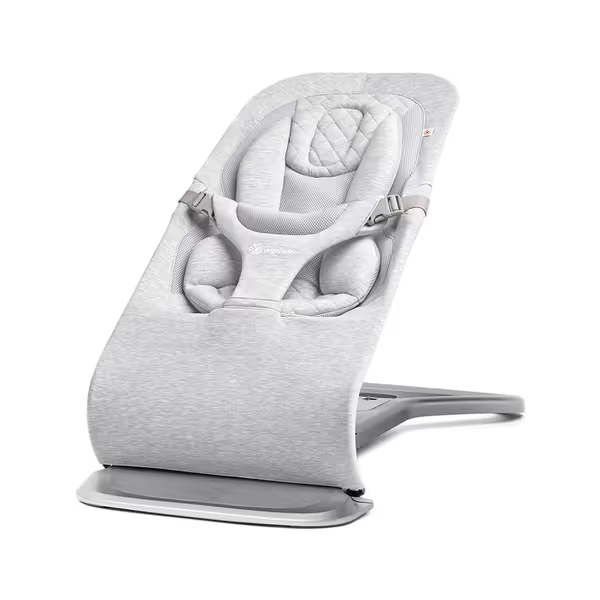
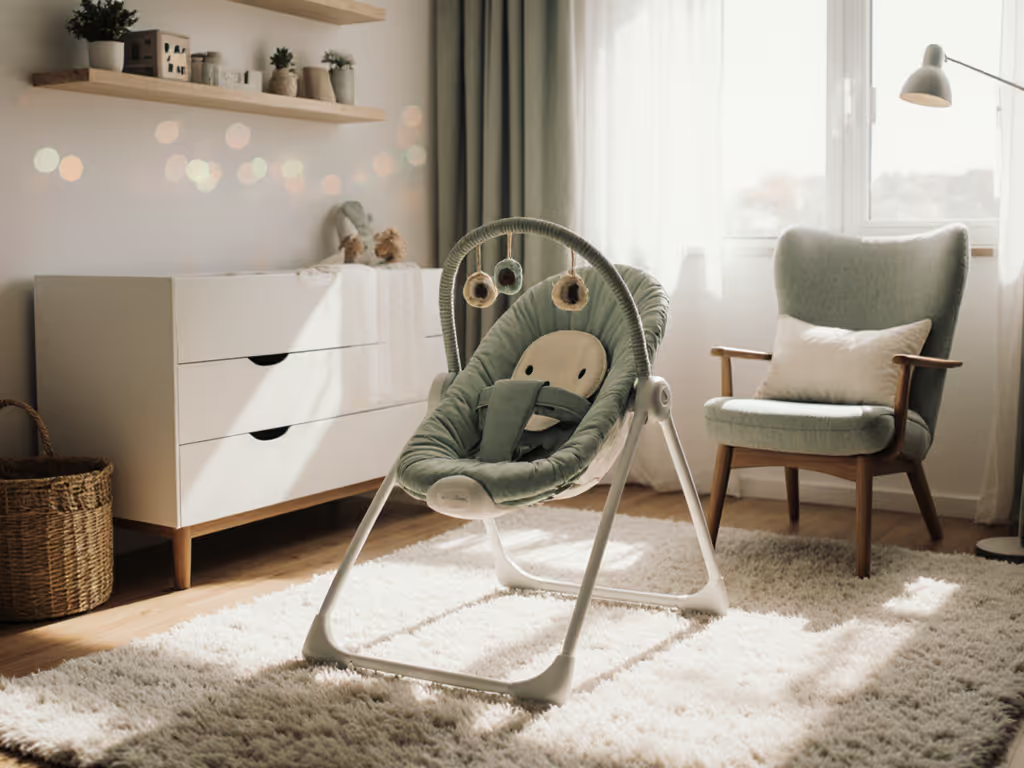
Ergobaby Evolve 3-in-1 Bouncer
Grows with baby, folds flat, offers ergonomic comfort and hands-free moments.
$199
Weight8.4 lbs (3.8 kg)
Weight8.4 lbs (3.8 kg)
Pros
3-in-1 design for newborn to toddler
Folds flat and lightweight for portability
Ergonomic support; machine washable cover
Cons
Higher price point
Customers love this bouncer seat, finding it comfortable, easy to assemble, and very easy to move from room to room.
Customers love this bouncer seat, finding it comfortable, easy to assemble, and very easy to move from room to room.
Q: What specific safety considerations differentiate proper bouncer use from carrier use?
A: While both products require vigilance, their risk profiles differ significantly. With bouncers, the primary concerns are:
- Inadequate recline angles causing chin-to-chest positioning that may compromise airways
- Unstable bases that allow excessive tipping during active bouncing
- Exceeding age/weight limits that compromise structural integrity
For carriers, key safety considerations include:
- Proper hip positioning that maintains natural "M-shape" to prevent hip dysplasia
- Harness security that prevents slumping or slipping through openings
- Caregiver fatigue that leads to compromised positioning during extended wear
The International Hip Dysplasia Institute recommends that all infant seating positions should maintain the hips in abduction and flexion, a position supported by properly designed bouncers and carriers. When I've observed parents in home visits, those who created plain-language checklists for each product transition (e.g., "harness snug, feet supported, awake and supervised") consistently implemented safer routines than those relying solely on product manuals. For age limits, harness use, and placement tips, see our bouncer safety guidelines. Small changes, repeated often, make a real difference.
Q: How do cleaning and maintenance requirements differ between these two gear types?
A: Practicality matters immensely when caring for a newborn, especially with frequent spit-up, drool, and blowouts. Consider these maintenance realities:
Bouncer Seats:
- Fabric removal complexity (one-piece vs. multi-component)
- Frame crevices that trap crumbs and fluids
- Base material that either absorbs or repels odors
- Drying time for machine-washable components
Carriers:
- Sweat absorption in shoulder straps and waist belts
- Zipper/stitching durability with frequent washing
- Mesh integrity after repeated cleaning cycles
- Padding compression from regular use
A parent in my urban parenting group once whispered they'd given up on their first bouncer because cleaning took longer than the 15-minute quiet moments they sought. We developed a simple protocol: wipe-down immediately after use, fabric removal within 30 minutes, and a dedicated laundry basket for baby gear textiles. This routine transformed their experience (another example of how safety scales with habit through practical implementation strategies). For a step-by-step routine, follow our baby bouncer cleaning guide.
Q: When should I use a bouncer versus a carrier for specific activities throughout the day?
A: Strategic deployment of each product according to your natural rhythm creates maximum value. Consider this activity-specific framework:
Optimal Bouncer Use Cases:
- Feeding transitions: For the 5-10 minutes after bottle feeding while burping and settling
- Quiet alert time: 15-20 minute intervals when baby is awake but not actively playing
- Short caregiver tasks: Showering, meal prep, or quick work tasks requiring both hands
- Visual development: Positioned where baby can observe household activity without overstimulation
Optimal Carrier Use Cases:
- Movement transitions: Between rooms or during household chores
- Colic management: Gentle movement during fussier periods
- Sibling interaction: Keeping baby involved while attending to older children
- Outdoor exploration: Controlled exposure to environmental stimuli
Research indicates that understanding these distinct activity purposes prevents unsafe adaptations, like using carriers for extended stationary periods or bouncers for movement. The key is recognizing that baby gear for feeding vs playing requires different positioning protocols, even within the same product category. Matching the activity to the tool reduces risk and increases comfort.
Q: What are realistic expectations for how long my baby will actually use each type of gear?
A: Most manufacturers overstate usable age ranges. Based on observational data from home visits and developmental milestones:
- Bouncers: Truly useful from birth to approximately 5-6 months (when independent sitting begins), with some models extending to toddlerhood through convertible designs
- Carriers: Maximum practical use from birth to 12-18 months (depending on caregiver strength and baby's weight)
The most space-efficient approach combines a single high-quality bouncer infant seat with one versatile carrier. Look for products with documented adjustability (like the Evolve's three-position height adjustment) that accommodate growth through multiple developmental stages. This strategy addresses the multi-use infant seating strategies that minimize clutter while maximizing utility.
Importantly, recognize that safe transitions between baby gear require supervision and awareness of your infant's changing capabilities. When babies begin pushing up on hands and knees (around 5 months), most bouncers become unsafe as they can tip the center of gravity. Similarly, carriers require harness adjustments as babies gain mobility.
Strategic Implementation: Building Your Activity-Specific System
Rather than viewing bouncers and carriers as competing solutions, envision them as complementary tools within your daily ecosystem. Your specific living constraints and baby's temperament will determine the optimal balance.
Understanding that bouncer for quiet time vs carrier for movement represents fundamentally different activity purposes transforms how you integrate these products into your routine. This distinction prevents misuse and maximizes value.
For small-space living, prioritize one versatile bouncer infant seat that folds flat and one convertible carrier that adjusts through multiple positions. Look for products with:
- Machine-washable, quick-dry fabrics
- Documented stability testing (low center of gravity)
- Clear developmental transition guidelines
- Space-efficient storage profiles
- Replacement part availability
Remember that exhausted caregivers often make compromises with gear they don't fully understand. Develop simple, timer-based routines: 20 minutes in the bouncer followed by floor time, or 30 minutes in the carrier interspersed with interaction breaks. These micro-routines build safety into your daily flow rather than relying on products to solve complex care challenges. Small, consistent steps compound.
Final Verdict: Choosing Wisely for Your Space and Rhythm
For urban parents navigating tight quarters and limited storage, the choice between bouncer infant seats and carriers isn't binary, it is about strategic allocation of precious space. The evidence consistently shows that activity-specific baby gear deployed according to your family's actual daily flow creates more value than owning multiple single-purpose items.
Your optimal configuration likely includes:
- One versatile bouncer that accommodates newborn-to-toddler transitions through adjustable positioning
- One convertible carrier that supports multiple carry positions from birth through toddlerhood
- Clear, written usage guidelines that specify appropriate timing and positioning for each activity
Above all, recognize that no product replaces attentive caregiving. When someone told me they'd risked letting their newborn nap in a bouncer because it was their only quiet moment, we developed a simple 5-minute transition routine that moved baby to a safe sleep surface while preserving their needed break. Short stints, supervised use, and quick cleanups created calm without compromising safety.
Your best investment isn't a single product; it is the routines that transform any gear into a safe, valuable part of your parenting ecosystem. Because safety scales with habit, not with the price tag or features of the equipment itself.