
How to Choose Ergonomic Bouncers for Spinal Health
By Kenji Sato • 7th Mar
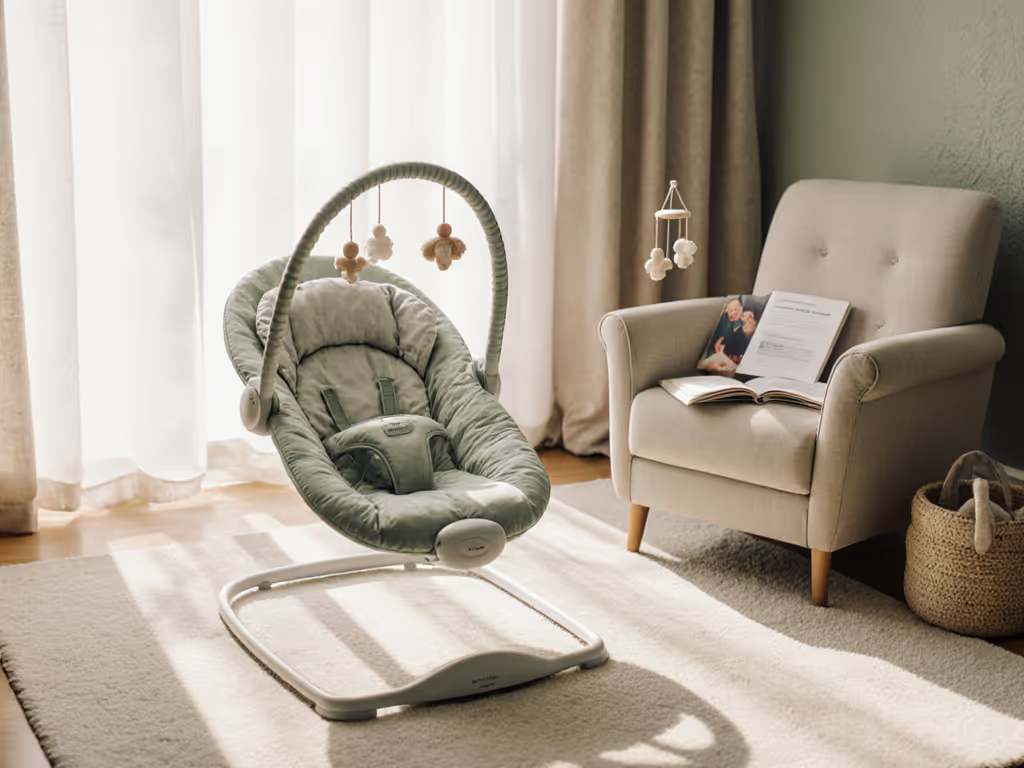
Spinal alignment in infants is not a luxury. It is foundational. Babies develop postural curves in their first year, and during that time, the devices they sit in shape everything from muscle tone to cranial symmetry. An ergonomic bouncer for spinal development isn't just about comfort; it's about physics, fabric choice, and footprint. Most first-time parents inherit overwhelming product grids that ignore real constraints: Does it fold flat? Can you wipe it clean? Will it announce itself during a work call? This guide cuts through the noise and walks you through what actually matters when selecting a spinal alignment baby bouncer for a compact home.
1. Prioritize the M-Position Seat Geometry
The foundation of spinal health is posture geometry. Research into infant spinal muscle activity confirms that babies develop stronger postural support when they're positioned in a neutral, supported alignment (often described as the 'M' or tuck-and-spread position).[1][2] In this position, the knees are elevated slightly higher than the hips, the pelvis tilts slightly, and the spine maintains a gentle curve rather than forcing the baby into a slouch or deep recline.[1]
When evaluating an infant bouncer seat, examine the angle of the seat basin. It should cradle the baby rather than swallow them. The angle should be close enough to vertical that gravity aids postural muscle development, not so reclined that the baby's abdomen rounds or the chin tips forward.[3] Dimension-led specificity matters: measure the seat basin depth and angle against your baby's current length and compare it to the manufacturer's stage guidelines. If the seat is too deep for a newborn, a proper newborn insert (designed to avoid forcing the head into a tilted position) is non-negotiable.[1][4]
2. Verify the Newborn Insert Prevents Flat Head Syndrome
In the first weeks, a newborn's neck mobility is severely limited: the head can only turn to the side about 45 degrees, and only with slight hyperextension of the cervical spine.[1][4] Without proper head support, babies develop positional flattening, or flat head syndrome. For step-by-step head and body alignment, see our proper bouncer positioning tips. An ergonomic bouncer must include a contoured newborn insert that supports the back of the head without forcing the chin toward the chest, allowing the baby to breathe freely and reposition naturally.[1][4]
Before purchasing, ask: Is the insert included or sold separately? Can you remove it as the baby grows? Does it fit snugly in the seat basin without gaps? Good design here is quiet about itself. The insert should work so well that parents forget it's there. Material matters too: soft, breathable cotton or mesh over hard plastic prevents heat trapping and irritation against delicate skin.
3. Choose Fabrics That Stain-Test Before You Buy
This is where material vocabulary shifts from abstract comfort to practical life. Spit-up, blowouts, and milk leaks are constants, and the fabric you choose determines whether cleanup is a five-second wipe or a weekend laundry spiral. During my own compact-living research, I ran tomato sauce stain tests on various infant-gear covers (the ones that mattered most lived behind a plant, because they slid easily away, wiped clean, and didn't hold odor or discoloration).[1][3]
When assessing an infant activity bouncer, verify that the cover is fully removable and machine-washable. For upkeep beyond stain resistance, use our bouncer cleaning guide. Check the fabric content: microfiber blends or tightly woven cotton resist staining better than loosely knit jersey. Avoid deep seams or crevices where milk can hide and sour. The frame itself should be wipeable plastic or powder-coated metal (no fabric folds or velcro soft goods that trap crumbs and smell). Some bouncers come with moisture-barrier liners under the fabric, a small feature that prevents liquids from seeping into foam and creating mildew.
4. Measure Against Your Actual Floor Plan
Storage depth is the hidden variable in bouncer shopping. A full-size baby bouncer can occupy 30 inches of floor space and take up an entire corner or hallway. Compact apartment dwellers need to reverse-engineer: if your bouncer must stash behind a sofa or door, measure that gap first, then search for bouncers with folding legs or reversible designs that compress to under 24 inches deep.[7]
Weight and one-handed portability matter as much as footprint. Can you lift it with one hand to move it between rooms or up stairs without strain? Postpartum mobility is real, and a lightweight frame (under 8 pounds) with a secure handle makes the difference between a tool you use daily and a fixture you avoid moving. Check the feet: non-slip, floor-friendly rubber pads prevent scratches on hardwood and won't squeak against tile when you rock the bouncer gently.
5. Confirm Hip and Spinal Support Through Medical Partnerships
Legitimate ergonomic bouncer manufacturers collaborate with pediatric medical specialists and physical therapists to validate design.[7] Before buying, look for certifications from organizations like the International Hip Dysplasia Institute (IHDI), which evaluates whether devices properly support hip development and spinal alignment without forcing the legs into harmful angles.[5] For model-level comparisons, see our hip-healthy bouncer comparison.
Read the technical specifications for lateral support mentions: the bouncer should stabilize the baby's sides to prevent rotation and slouching. The seated baby's spine should remain in a neutral curve, not twisted or hyperextended.[1][2] If the manufacturer doesn't cite medical consultation or certifications, move to another option. Quiet design belongs in this space because safety through proper geometry doesn't require flashy claims. Good design speaks in measurements.
6. Test Durability and Longevity Through Adjustability
A newborn bouncer and a toddler chair are often two separate purchases, but hybrid designs with adjustable reclines and removable features can bridge that gap. The best infant bouncer options offer at least three recline positions, allowing you to adjust the angle as your baby grows, from full recline for newborn positioning to more upright settings for sitting play and eating.[7]
Check whether the removable newborn insert lets you transition to a bare seat later. Can the harness be adjusted as the baby grows, or is it fixed? Is there a warranty covering wear, and are replacement covers and parts readily available? Longevity is not just about money saved. It's about not cycling through gear, which defies the minimalist logic of small-space living.
7. Listen Before You Buy: Test the Acoustics
Motor hum, squeaking joints, and rattling toys are invisible killers of peace. Work-from-home parents on calls, light sleepers sharing walls, and anyone with sensory sensitivity cannot tolerate an audible bouncer. Before ordering online, try to hear a demo unit or watch high-quality video reviews that capture ambient sound.[5]
Manually-bouncing models (parent-powered) eliminate motor noise entirely but require active engagement. Battery-powered or electric models should have smooth, consistent motion without grinding or buzzing. Test the frame joints: do they move silently or produce squeaks? Are there detachable toys you can remove? If quiet operation is non-negotiable in your home, prioritize manual bouncers or ultra-smooth electric models with sealed mechanisms and no rattling attachments.
8. Cross-Reference Age Windows and Weight Limits
Ergonomic benefit is age- and development-specific. A bouncer optimized for newborn spinal alignment may become counterproductive once a baby can sit up independently (around 6 months), at which point the recline angle and containment design become too much support. Conversely, a bouncer that works well for a 4-month-old may be too upright for a newborn.[1][4]
Review the manufacturer's age and weight recommendations carefully. For expert-backed milestones and usage caps, consult our bouncer age timeline. Crossing these thresholds risks reducing the biomechanical benefit and introduces posture problems. If you plan to use the bouncer across multiple stages (newborn to toddler), select a model with clear transition milestones and adjustability built in. This clarity prevents the false economy of buying wrong and replacing.
9. Assess Storage and Aesthetic Fit Before Committing
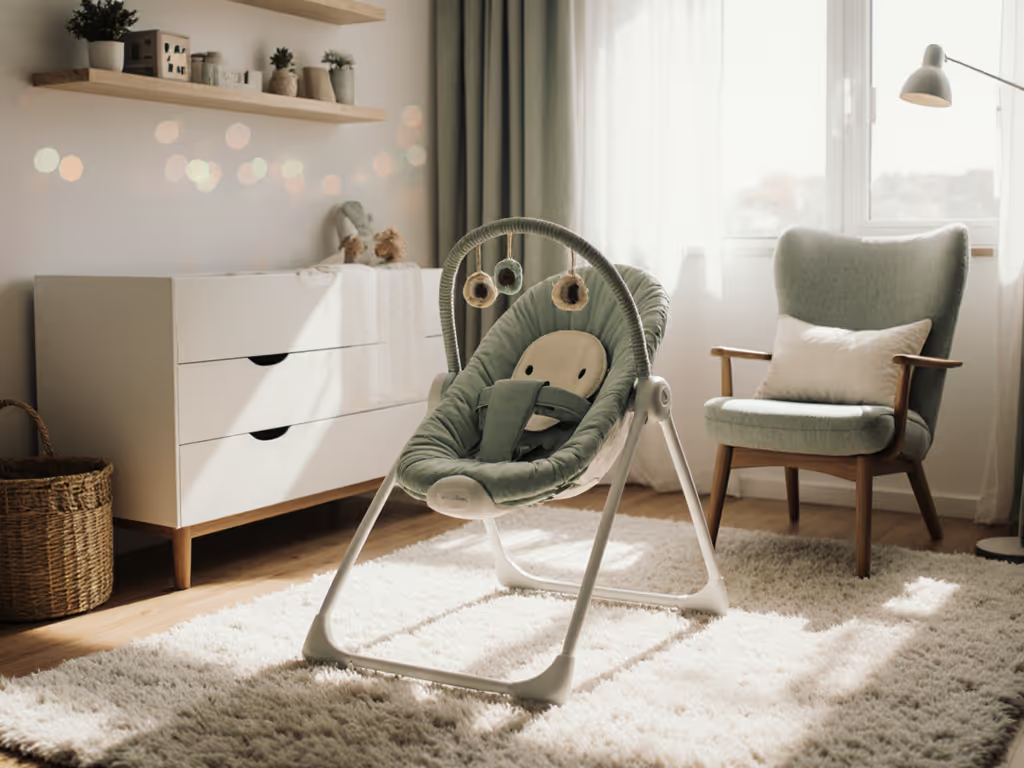
The bouncer must feel like a tool, not an ornament. Choose a neutral fabric color (matte grays, soft whites, taupes) that blends with adult interiors rather than announcing itself with primary colors or cartoon prints. Slim frames and compact footprints in warm woods or muted metals disappear into corner spaces better than bulky plastic forms.[7]
Fold-flat models with reversible or removable covers offer flexible display options: upright as a chair when in use, folded behind furniture when not. This approach to storage math (how many inches you actually need and where the bouncer lives) defines whether it becomes a daily workhorse or a space-hogging regret.
10. Prioritize Vestibular Development Through Smooth, Predictable Motion
The baby's vestibular system (the balance centers in the brain) develops through consistent movement input.[3][5] An ergonomic bouncer with smooth, predictable motion (no jerking or stuttering) supports this development more effectively than chaotic or overstimulating movement.[5] Gentle, rhythmic bouncing engages the baby's muscles and coordination without causing sensory overload.[5]
When testing motion, look for units that rock or bounce smoothly without hesitation. Avoid bouncers with unpredictable movement, sudden stops, or loud mechanical shifts. The goal is an experience so reliable and calm that the baby (and parent) can trust it. Data-driven selection here means testing the actual motion pattern in person or via detailed video, not relying on marketing language.
Further Reading and Decision Support
Choosing an ergonomic bouncer for spinal health requires layering dimensions, fabric science, certification history, and the realities of your footprint and sensory environment. Print a checklist: note your available floor space, listen for noise, verify medical partnerships, and test fabric samples with actual spit-up or tomato sauce. That transparency builds confidence. Quiet design belongs in every room of your home, especially where your baby spends time. Use these ten criteria as a framework to compare options side by side (measure, test, verify), rather than defaulting to the largest or loudest option on the shelf. Your spine will thank you, and your home will stay calm.