Travel Vehicle Bouncer Compatibility: Comparison Guide
By Priya Menon • 2nd Jun
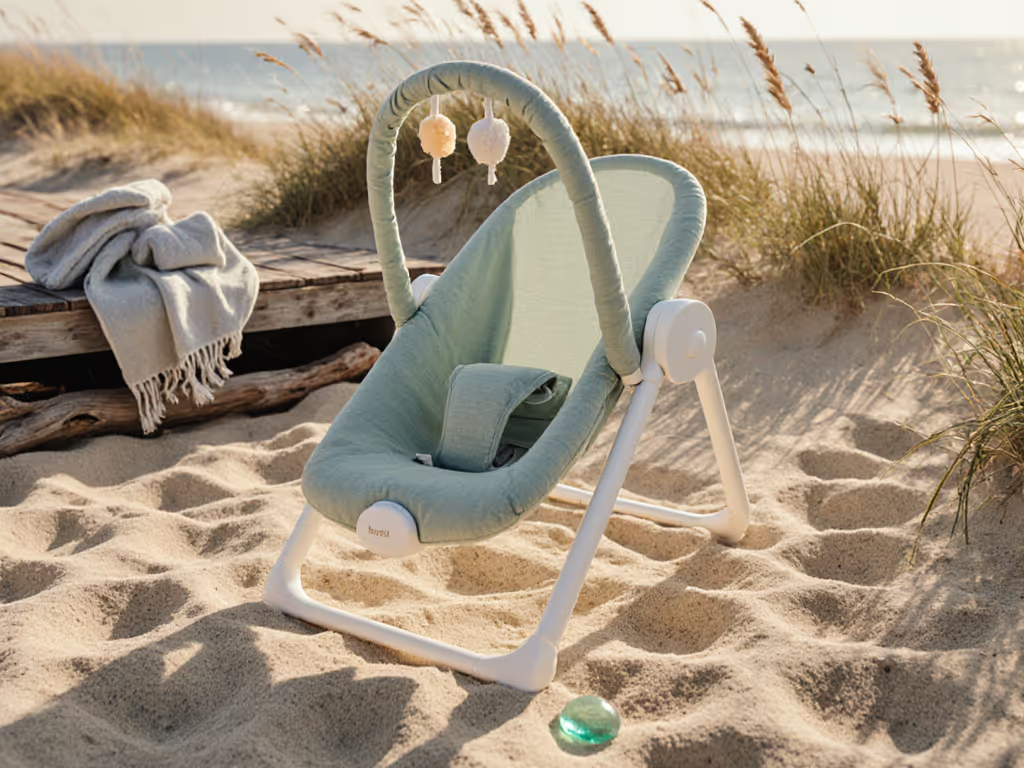
Travel vehicle bouncer compatibility is less about clever "systems" and more about how safely and sanely a bouncer fits into your real life with a car, stroller, and tiny floor plan. This guide compares your options so you can build calm, repeatable routines instead of collecting bulky gear.
What does "travel vehicle bouncer compatibility" actually mean?
When I say travel vehicle bouncer compatibility, I am not talking about using a bouncer in a moving car or clipping it onto a car seat base.
For safety, the only safe restraint for a baby in a moving vehicle is an approved car seat, correctly installed and buckled. A bouncer is for when the vehicle is parked and you are out of the car.
So in real life, "compatible" usually means:
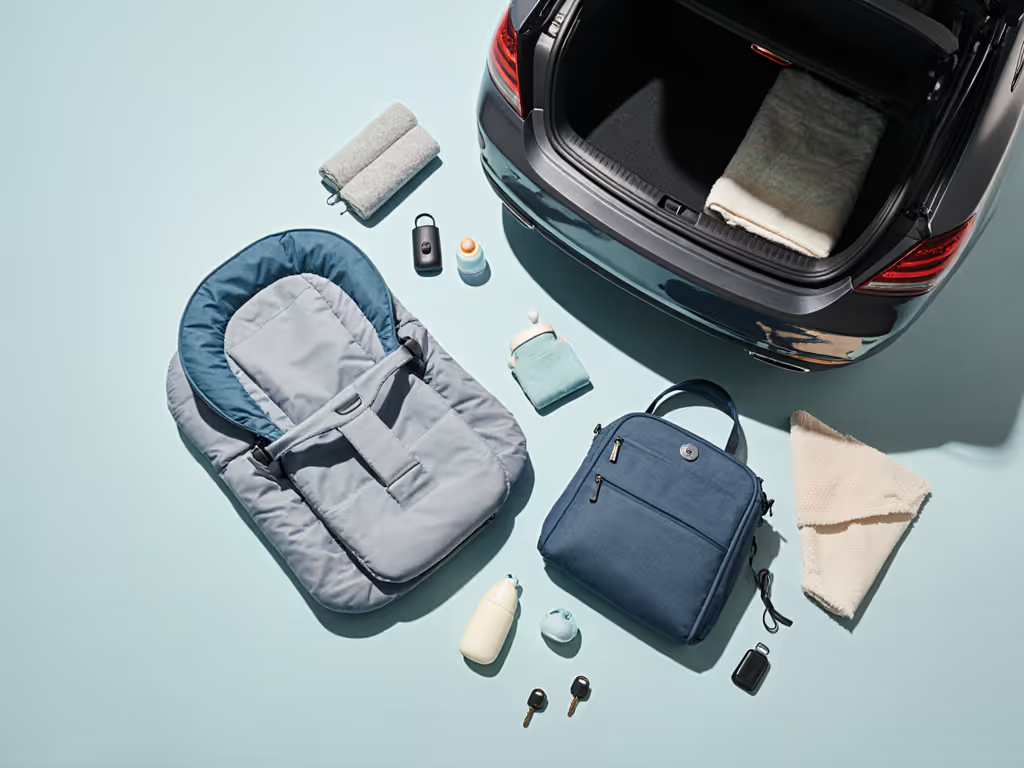
- It fits your car (trunk, hatch, or footwell) without wrestling.
- It's light and foldable enough to carry along with your baby and diaper bag.
- It works smoothly with your stroller-to-bouncer transition at your destination (park, grandparents' house, vacation rental).
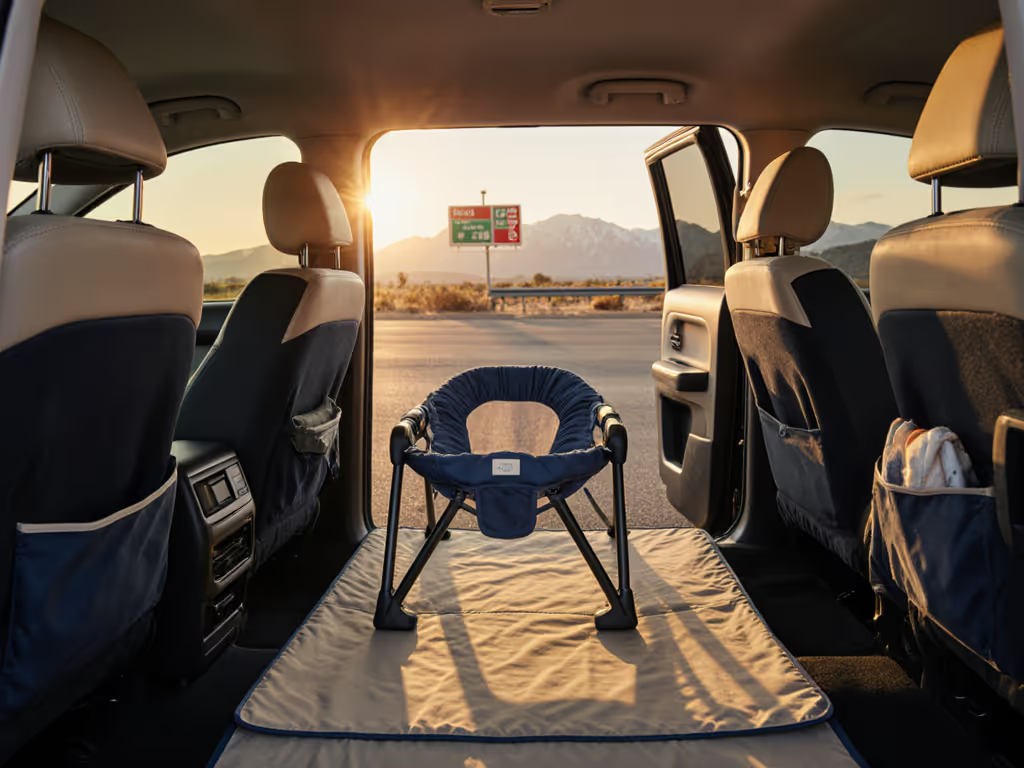
- It stays stable on floors and patios as a floor infant seat alternative when you need short, supervised breaks.
A bouncer can be a useful travel helper, but this device is not a nap spot.
--
Is any bouncer safe to use in a moving car or attached to a car seat?
No. No bouncer is safe to use in a moving vehicle. For a full primer on safe bouncer use on trips, see our bouncer safety guide.
A few clear rules:
-
No use in a moving vehicle Never place a baby in a bouncer on a car seat, van bench, SUV trunk, or RV floor while the vehicle is moving.
-
No bouncer car seat integration If a product hints you can strap or clip a bouncer onto a car seat or base, treat that as a red flag. Car seats go through strict crash testing. Bouncers do not.
-
No DIY straps or hacks Don't use aftermarket straps, bungee cords, or seatbelts to "secure" a bouncer in a vehicle. That violates both car seat and bouncer safety, and can turn the bouncer into a projectile.
-
Parked only, baby removed In the car, baby rides in a car seat. Once you arrive, you can remove baby from the car seat and then use a bouncer on the ground at your destination.
If you remember only one thing from this guide, let it be this: a bouncer is for supervised, short-term use on the floor (never as a restraint in a moving car).
--
How should I compare bouncers for a small car or ride-share life?
Think like a tired caregiver standing at the trunk with a sleepy baby on one hip. If you want specific model ideas that pack small, check our compact travel-ready picks. The best vehicle-safe bouncer (again: safe for transport, not for use while driving) will be:
1. Compact when folded
- Fold-flat or almost flat
- Under about 5-7 lbs so it's easy to lift with one hand
- Simple fold: no tools, no multiple loose pieces
2. Friendly to your car layout
Ask yourself:
- Can it slide behind the front seat, stand upright in the trunk, or tuck under a stroller frame?
- Is the frame shape going to snag on stroller wheels or car seat bases when you pack and unpack?
Measure these:
- Bouncer folded length and width
- Trunk opening height
- Any shared spaces (e.g., hatch with dog crate, stroller, or groceries)
3. Easy to carry from car to destination
Look for:
- A defined handle point or balance point when folded
- A weight you can manage up stairs or through hallways postpartum
- No sharp edges bumping your legs while you walk
If you rely on ride-share or taxis, prioritize:
- Very slim fold that can slide behind your legs on the floor or into a small trunk
- Quick open/close so you're not holding up drivers
--
Can I clip a bouncer to my stroller or infant car seat?
Short answer: No. Bouncers are designed as floor infant seats, not as add-on modules.
Here's how to think about bouncer car seat integration and stroller use:
-
Car seat goes from car to stroller If you have a travel system, your infant car seat usually clicks directly onto the stroller. Use that for getting from vehicle to building, not a bouncer.
-
Bouncer stays on the floor Once you're inside or on level ground, you can unclip baby from the car seat and place them in the bouncer on the floor, away from stairs, pools, and edges.
-
No hanging bouncers from stroller frames Don't suspend a bouncer from a stroller handle or basket to save space. That can tip the stroller or stress the frame.
If you like a fairly seamless stroller-to-bouncer transition, plan a simple routine instead of hunting for "integration" features:
- Park the stroller somewhere safe and stable.
- Set the bouncer on the floor and lock it open.
- Move baby from car seat or stroller into the bouncer.
- Start your timer for 10–20 minutes of supervised use.
Simple, repeatable steps often turn out smoother than complex gear combos.
--
What features matter most in a "vehicle-safe bouncer" for travel?
Again, "vehicle-safe" here means safe to transport and to use at your destination, not safe for use in a moving vehicle.
Focus on these comparison points:
1. Fold and footprint
- Flat or near-flat fold so it fits under a hotel bed, sofa, or in the car trunk
- Small in-use footprint so you can place it in tight spaces at grandparents' houses or rentals
2. Stability and height
- Low center of gravity and wide base so it doesn't tip easily
- Non-slip feet that grip hardwood, tile, and low-pile rugs
- Avoid tall bouncer stands or elevated frames for travel; low to the ground is safer and more stable.
3. Seat support and recline
- A supportive, contoured seat: not a deep "hammock" that curls baby's chin to chest
- Appropriate recline for baby's age; more reclined for newborns, more upright as they gain head control
- Clear weight and age limits printed on the product
4. Fabric and cleaning
Travel magnifies mess:
- Fully removable, machine-washable cover
- Faster-drying fabrics (mesh or thin padded covers) so you're not stuck without a seat on day two of a trip
- Minimal crevices where crumbs and pet hair collect For step-by-step upkeep on the road, follow our bouncer cleaning guide.
5. Noise and environment
You may be sharing walls or visiting quiet homes:
- Smooth, quiet bounce motion with no loud squeaks
- No mandatory music or lights; those add noise and often bother adults and sensitive babies
Safety lives in routines, not marketing claims or modes.
Choose the simplest design that fits your space, then focus on how you will use it: timers, supervision, and clear limits.
--
How does a bouncer compare to a floor infant seat for travel and vehicles?
Many families in small spaces debate between a floor infant seat (like a molded, semi-upright seat) and a bouncer. Here's a simplified comparison:
| Feature | Bouncer | Floor infant seat |
|---|---|---|
| Movement | Gentle baby- or parent-powered bounce | Static, no bounce |
| Fold | Often foldable | Usually rigid, bulkier to pack |
| Age fit | Better for younger infants (with proper recline) | Often for babies with more head/trunk control |
| Cleaning | Fabric cover to wash | Hard surface to wipe, but crevices can trap mess |
| Travel | Lighter, easier to stash | Bulkier in car, sometimes more stable outdoors |
If your priority is travel vehicle bouncer compatibility (fitting gear into a small car without giving up trunk space), a foldable bouncer usually wins over a rigid floor infant seat.
--
How long can my baby stay in a travel bouncer at a time?
Use the same cautious time limits on the road that you use at home:
- Aim for 10–20 minute stretches, with a maximum of about 30 minutes, a few times a day.
- Use a timer on your phone or smart speaker so you don't lose track while chatting, unpacking, or cooking. For positioning cues and safe-duration tips, see our proper bouncer positioning guide.
This protects:
- Your baby's airway and positioning (too much time in any container (bouncer, car seat, swing) can be hard on breathing and skull shape).
- Their opportunity for floor play and movement, which drives motor development.
And if baby falls asleep in the bouncer during that short window?
- Gently move them to a flat, firm sleep surface on their back as soon as you can.
Even on vacation, this device is not a nap spot.
Many parents have quietly admitted in groups that a "quick" nap in the bouncer bought them a precious quiet moment. Instead of guilt, I encourage building a routine: short soothing in the bouncer, then a smooth move to a safe sleep surface. It often feels more doable when you practice the steps ahead of time.
--
What safety checks should I do when using a bouncer away from home?
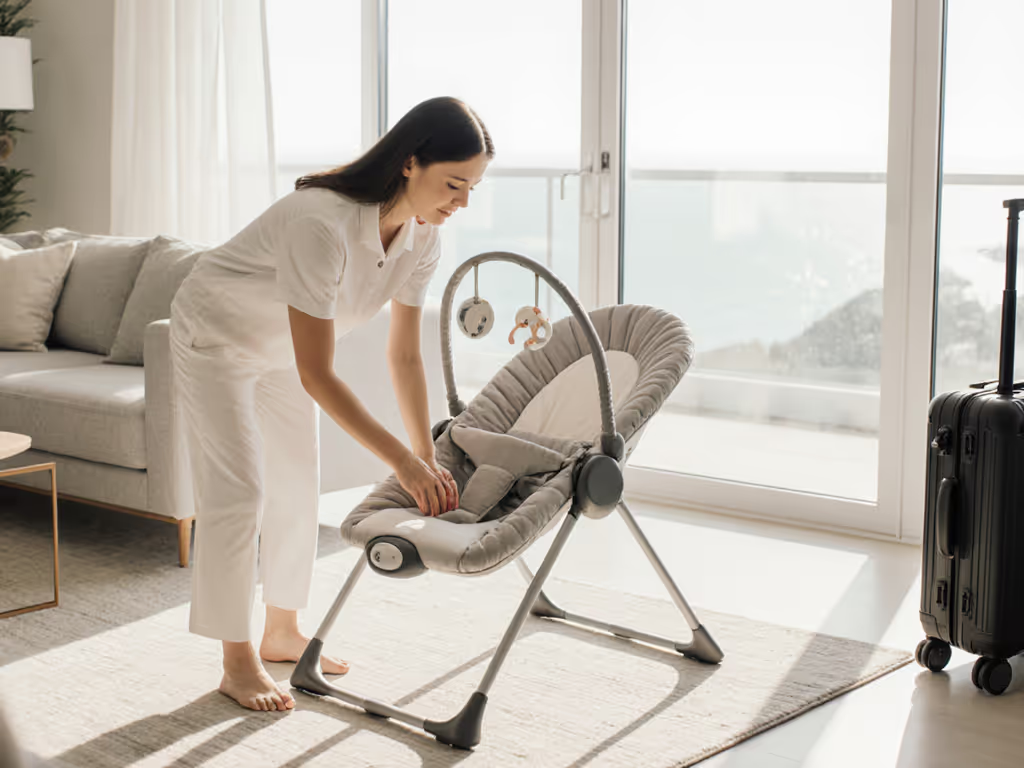
New environments add new hazards. When you set up a bouncer in a hotel, rental, or relative's home, run this quick checklist:
1. Surface
- Place on the floor only: never on beds, sofas, tables, counters, or soft ottomans.
- Avoid sloped or uneven floors, or areas near stairs and steps.
2. Clearance
- Keep at least an arm's length from fireplaces, heaters, cords, and blinds.
- Check for nearby pets who might jump or lean on the bouncer.
3. Harness and fit
- Always use the built-in harness as directed: snug but not digging in.
- No added straps or aftermarket inserts that the manufacturer didn't approve.
4. Toys and accessories
- Skip dangling toys for newborns; they can become entanglement or impact hazards.
- As baby grows, only use toy bars and attachments that came with your bouncer and are rated for your baby's age and activity level.
5. Supervision
- Treat the bouncer as a supervised-only space. If you need to nap, shower behind a closed door, or leave the room, move baby to a safe sleep surface or bring the bouncer into the bathroom where you can see them (but still not for sleep).
--
Is it worth buying a second, travel-only bouncer?
It depends on your routine and storage:
Consider a travel-only bouncer if:
- You split time between two homes.
- You visit grandparents weekly and want a dedicated setup there.
- You frequently road-trip and don't want to constantly pack/unpack your main bouncer.
In that case, prioritize:
- Lower cost but sturdy build
- Simple, flat fold that can live in a closet, behind a door, or under a bed
- Neutral fabric that hides stains and visual clutter
You may not need a second bouncer if:
- You travel occasionally and have space to pack your main one.
- You already have another safe place to put baby (e.g., a portable play yard) at your destination.
If you're budget-conscious or minimalist, start with one well-chosen bouncer and test how often you actually want it on trips before adding more gear.
--
Can I buy a bouncer used for travel?
Many families keep a secondhand bouncer in the trunk or at relatives' homes. If you go this route, use a safety-first checklist:
1. Check for recalls and missing parts
- Look up the brand and model on the manufacturer's site for recalls. For a verified process, use our CPSC recall check guide.
- Ensure the frame, harness, and any locking mechanisms are present and functional.
2. Inspect the frame
- No cracks, bending, or wobbling when pressed.
- All rivets, screws, and joints feel secure.
3. Evaluate the fabric
- No torn seams near harness points.
- No mold, strong odors, or embedded pet hair you can't remove.
- Ideally, the cover is still removable and machine-washable.
4. Replacement parts
- Check whether new covers or harness kits are available from the manufacturer if the originals are worn.
When in doubt, especially about structural integrity or harness safety, pass on the deal. A simple, new, lower-cost bouncer is safer than a fancy but compromised used model.
--
Summary and final verdict: how to choose a travel-ready bouncer for your vehicle
When you strip away marketing, you're comparing bouncers on just a few real-life questions:
-
Does it fold small enough for my car and my home? Look for a flat fold, light weight, and a footprint that fits your trunk or behind a seat.
-
Is it stable, supportive, and easy to clean? Low to the ground, wide base, non-slip feet, and a supportive seat with a washable cover.
-
Can I carry and deploy it easily while caring for a baby? One-handable, intuitive open/close, and no extra parts.
-
Does it fit into safe, repeatable routines? Short, timed, supervised use; baby moved to a flat sleep surface if they doze; no use in moving vehicles.
If you keep your focus on how and where you'll use the bouncer, not on how many "modes" it promises, you'll end up with gear that supports your day instead of running it. For most families, a simple, stable, fold-flat bouncer that rides in the trunk and lives under the sofa beats a bulky gadget that never quite fits the car or the routine.
And through every comparison, remember: even the smartest bouncer is just one tool in your kit. Safety and calm come from the rhythms you practice every day, because safety lives in routines, not marketing claims or modes.