
Best Bouncers for Back Pain: A Comparison
By Sofia Alvarez • 19th Mar
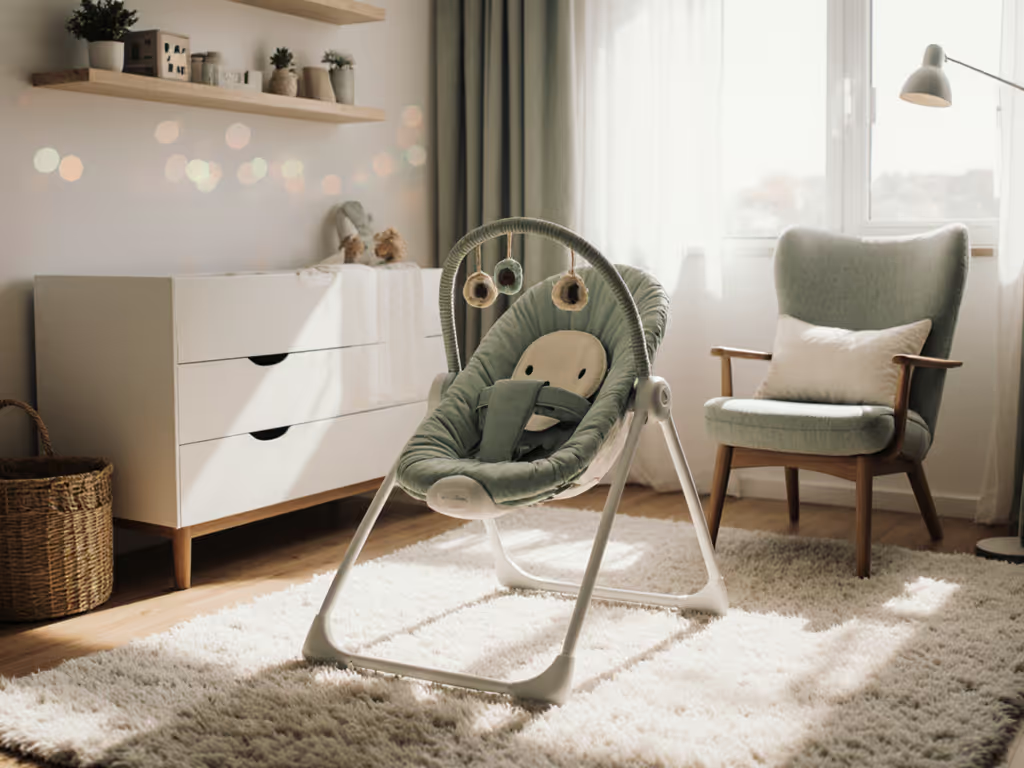
Your back hurts. You've been holding your baby for two hours because they sleep only when you move, and your lower spine is screaming. This is the invisible tax of early parenthood, the ache that nobody warns you about until you're living it, usually around 2 AM in your apartment.
An ergonomic bouncer for back pain isn't just nice to have; it's a tool that gives your spine relief by giving your arms a break. But not every bouncer works the same way, and not every bouncer fits a small home. The difference between a bouncer that sits idle in a corner (gathering dust and resentment) and one that becomes part of your daily rhythm comes down to how thoughtfully it's designed.
Understanding Caregiver Back Strain and Why Your Bouncer Choice Matters
When you hold a baby for hours, your posture collapses. Your shoulders round forward. Your lower back tightens. Over weeks, this compounds into real pain. An infant bouncer rocker does one essential thing: it holds your baby safely for stretches (15, 20, 30 minutes) so you can stand up straight, breathe, make coffee, or shower without guilt.
But here's what matters: the bouncer must be worth the space it takes. In a small home, every object is a negotiation. You're not buying a feature list; you're buying freedom and sanity, in a form factor that doesn't dominate your room.
The best bouncers for caregivers with back pain share three core traits: they fold flat for storage, they respond naturally to a baby's movement (no jarring electronic bouncing), and they support the infant's spine correctly so you're not just soothing, you're also protecting. Not sure whether a motorized model or a responsive design fits your space? See our automatic vs manual bouncer guide.
The Search for Simplicity: Why Less Stimulation Works Better
You might assume that a bouncer with lights, sounds, and vibration would soothe more. It doesn't. In fact, overstimulation often backfires. Babies (and exhausted parents) need calm over clever.
The research is clear: bouncers designed with neutral aesthetics, soft motion, and no flashing lights create a low-stimulus environment that actually helps both you and your baby feel settled. When I needed my second to rest while I showered, I didn't reach for the feature-heavy swing. I reached for something steady, quiet, and folding, because two-song windows beat twenty-feature remotes, every single time.
This principle applies whether you're managing colic, reflux, or simply needing your hands back. For condition-specific picks, explore our bouncers for reflux and colic. A simple, posture-friendly bouncer keeps the focus on the essential motion and safety, not on managing a remote or resetting a timer. It keeps life simpler.
Key Features That Reduce Back Strain and Fit Small Spaces
Foldability and Footprint
A bouncer that folds flat stashes under a bed, behind a door, or in a closet. In a studio apartment or small bedroom, this matters more than any single feature. Look for bouncers explicitly marketed as fold-flat; some models are bulky even when they claim to fold.
Responsive Bounce with Natural Motion
The best bouncers respond to your baby's weight and movement rather than relying on a motor or manual bouncing. This means your baby can self-soothe by kicking, shifting, or leaning slightly, without you pushing a pedal or holding your foot on a rocker base. This responsive motion is what calms an infant while your back stays vertical and stationary.
Proper Newborn Support (Ergonomic Inserts)
If you're starting with a newborn, head support matters enormously. An infant's head is proportionally heavy, and their neck muscles are weak. A bouncer without a supportive newborn insert can cause a baby's chin to drop to their chest, restricting breathing, or allow the head to loll sideways. A well-designed insert keeps the baby's head gently supported and open, with just enough give for natural movement.
As your baby grows (around 6 months), you can often remove the insert, transforming the bouncer into a seat for an older infant or toddler. This single-piece-of-gear-for-multiple-ages approach saves space and money.
Machine-Washable, Quick-Dry Covers
Spit-up happens. Blowouts happen. In a small home with limited washers or drying space, you need a cover that comes off in seconds and dries fast. Breathable mesh materials dry quicker than thick cotton and are less likely to trap odors. Easy care reduces friction.
Stability and Low Center of Gravity
A bouncer with a wide, stable base and non-slip feet won't tip if your baby shifts suddenly or if you set it on a slightly uneven floor. To protect your own posture day-to-day, follow our back-friendly bouncer placement guide. This peace of mind is foundational. You're already tired; you don't need to worry about balance.
Comparing the Top Ergonomic Bouncers
BabyBjörn Bouncer Balance Soft
The BabyBjörn is the go-to for parents who prioritize simplicity and quality. It has no electronic components, no plastic toys, no lights. It's just a well-engineered seat with responsive bounce.
Why it works for back pain relief: It responds naturally to your baby's movement, creating smooth, even motion without any manual rocking on your part. Once your baby is seated, you stand up and your back relaxes. The seat is secure, the bounce is consistent, and the design is so minimal it blends into any room.
Small-space advantage: It folds flat and is less bulky than many competitors, making it genuinely easy to stash.
Trade-off: It's one of the pricier options, and it doesn't transform into a toddler seat. Once your baby outgrows it (around 14 kg), you're done with it. Some families are comfortable with this; others prefer a longer lifespan. If you're weighing premium alternatives, see our BabyBjörn vs Stokke vs UPPAbaby comparison.
Ergobaby 3-in-1 Evolve Bouncer
If you want one bouncer to grow with your baby from newborn to toddler, the Ergobaby Evolve is the engineered answer. It was designed in partnership with a pediatric orthopedist and is the first bouncer to earn AGR certification (Campaign for Healthier Backs, yes, even baby-gear engineers think about back health).
Why it works for back pain relief: The natural, responsive bounce means you're not manually rocking; the baby's movement powers the motion. The bouncer has three height-adjustable recline positions, so you can set it to what your baby needs without constantly reconfiguring. The newborn insert keeps a tiny baby's spine and head properly supported from day one.
Small-space advantage: It folds and is lightweight enough to move between rooms one-handed or carry upstairs. If your partner uses it in the bedroom while you work from the living room, it can travel without becoming an ordeal.
Longevity: The 3-in-1 design means it adapts from a newborn lounger to an infant bouncer to a toddler seat. Many families use it for two or three babies and still have resale value. The cover is machine-washable, and replacement parts are available.
Trade-off: It's premium-priced. However, families often recoup cost through resale or by eliminating the need to buy a separate rocker, swing, and toddler chair.
Baby Delight Alpine Deluxe
If you live in a hot or humid climate, or simply want excellent breathability, the Baby Delight Alpine Deluxe stands out. It's mesh-covered, which means airflow is superior. Babies are less likely to get sweaty, and the cover dries quickly after washing.
Why it works for back pain relief: The bounce is responsive, and the three recline positions let you dial in the right angle for your baby's comfort. Like other quality bouncers, once it's set up, you're hands-free.
Small-space advantage: It folds flat and includes a carry bag, so portability is built in. Easy to move, easy to store.
Bonus feature: The cover is removable for machine washing, crucial for managing spit-up, blowouts, and the occasional pet hair in a shared space.
Trade-off: It's bulkier than the BabyBjörn, and it doesn't grow into a toddler seat. It's best for the bouncer phase (roughly 4 weeks to 9 months).
Reducing Caregiver Back Strain: The Real Outcome
The best bouncer for back pain is the one you'll actually use, because it fits your space, your aesthetic, your cleaning capacity, and your budget. A low-impact bouncer isn't about being gentle on the bouncer; it's about being gentle on your spine.
When you place your baby in a well-designed bouncer, you're not just buying a seat. You're buying the ability to stand up straight for the first time in hours. You're buying the shower. You're buying the moment to eat a warm meal or step outside for two minutes. You're buying the return of your own body to your control.
The responsive bounce, whether it's the minimal BabyBjörn, the adaptive Ergobaby, or the breathable Baby Delight, does this work without asking anything of you except to set it down gently and step away. No pedals to pump. No batteries to change. No remote to master. Calm is designed with repeatable steps and low-stimulus tools, and a good bouncer is both.
How to Choose: A Simple Framework
Ask yourself three questions:
1. How long do I need this bouncer to work? If you want newborn-to-toddler coverage and plan to use it for multiple children, the Ergobaby Evolve pays for itself. If you're happy retiring it after year one and selling it, the BabyBjörn or Baby Delight make sense.
2. What's my climate and cleaning reality? If you have thin walls, a sleeping partner, or WFH calls, prioritize quiet bouncers (all three excel here). If heat or humidity is constant, mesh breathability (Baby Delight) becomes essential. If you're in a cramped home with limited drying space, machine-washable covers and quick-dry materials matter most. Match the fabric to your daily life.
3. What's my actual footprint? Measure the space where you'll store it. The BabyBjörn is genuinely the flattest; the Ergobaby folds but is slightly bulkier; the Baby Delight includes its own carry bag but takes up more floor space when deployed.
A Gentle Reminder: Your Back Matters
Parents, especially mothers, often minimize their own pain. You convince yourself that holding your baby is "good for bonding" and that your aching back is "just part of it." It's not. Your wellbeing is foundational to your baby's wellbeing. A bouncer that genuinely works is preventive healthcare for you.
The best bouncer for your back pain is waiting for you, but only if you choose based on honesty: your space, your standards for cleanliness, your budget, and how long you realistically need the gear. There's no guilt in buying a tool that keeps you upright and your baby safe. There's only wisdom.
Next Steps: Making Your Choice
Start here: Measure your storage space (under your bed, behind a door, in a closet). Write down the dimensions. This single constraint will eliminate options and clarify what's actually feasible.
Second: If you live in a small home with thin walls or shared space, prioritize quiet operation. All three bouncers mentioned here excel here, but if you're sensitive to any hum or squeak, test one in person before committing.
Third: Decide on lifespan. Are you planning to use this bouncer for one baby or multiple children? This answer determines whether you invest in the Ergobaby's 3-in-1 design or go simpler and more affordable.
Finally: Order from a retailer with a clear return policy. You need the confidence that if a bouncer doesn't fit your space or your baby, you can return it without friction. Your back and your peace of mind depend on getting this right the first time.
Your spine will thank you. So will your baby.
Related Articles