How to Transition Baby to Bouncer Safely and Smoothly
By Priya Menon • 30th Oct

Did you know that over 30 percent of baby injuries linked to bouncers come from improper setup or use? For new parents, creating a safe and cozy spot for your little one is top priority. By learning how to use a baby bouncer the right way, you set the stage for comfort and peace of mind. Simple steps can make a world of difference in keeping your baby secure and happy during their earliest months.
Quick Summary
| Key Point | Explanation |
|---|---|
| 1. Prepare the bouncer safely | Assemble the bouncer on a flat surface, ensuring all parts are secure and stable to prevent accidents. |
| 2. Gradually introduce your baby | Start with short sessions and engage with your baby to build comfort in the bouncer environment. |
| 3. Ensure proper positioning | Use the safety harness, ensuring it fits snugly and supports your baby’s head and neck correctly. |
| 4. Monitor comfort and reactions | Pay attention to your baby's cues, adjusting session length and bouncer settings based on their responses. |
| 5. Adapt routines to fit growth | Balance bouncer use with interactive playtime, modifying as your baby grows and develops new needs. |
Step 1: Prepare your baby's bouncer for first use
Getting your baby's bouncer ready for its first use requires careful attention to detail and safety. This step is about creating a secure environment where your little one can relax comfortably and safely.
Start by carefully unpacking the bouncer and checking all components against the manufacturer's instruction manual. Make sure every piece looks intact no damage or missing parts. Spread out the components on a clean floor space where you have plenty of room to work.
Assemble the bouncer precisely following the manufacturer's instructions. This means connecting frames securely and checking that all locking mechanisms click firmly into place. Pay special attention to the base and how it connects to the seat frame double check that everything feels stable and balanced.
Once assembled place the bouncer on a completely flat hard surface like a wood or tile floor. Avoid carpets soft rugs or uneven ground that could compromise the bouncer's stability. The Consumer Reports safety guide emphasizes placing bouncers only on level ground to prevent potential tipping or sliding.
Test the bouncer's stability before placing your baby inside. Gently push and rock the frame to ensure it doesnt wobble or shift. The safety harness should be easily adjustable and click securely when fastened.
Pro Tip: Always keep the original packaging and instruction manual for future reference and potential warranty claims.
You are now ready to introduce your baby to their new comfortable and safe bouncing space. The next step will involve learning how to safely position your baby in the bouncer.
Step 2: Introduce the bouncer gradually to your baby
Introducing your baby to a new bouncer requires patience sensitivity and a thoughtful approach. Your goal is to help your little one feel comfortable and secure in this new environment.
Begin with short initial sessions that last just a few minutes. Place your baby in the bouncer when they are calm and not overly tired or hungry. The Centers for Disease Control recommends engaging with your baby during these early moments by talking softly singing gentle songs or playing quiet background music to create a positive association.
Watch your babys reactions closely during these first encounters. Some babies might seem curious and relaxed while others could feel uncertain. If your baby appears uncomfortable remove them from the bouncer and try again later. The key is to make this experience feel natural and non threatening.
Position the bouncer in an area where you can maintain visual contact. Stay nearby and interact with your baby periodically. Your presence will help them feel safe and reassured. Consumer Reports suggests gradually increasing bouncer time as your baby becomes more accustomed to the new space.
Use the bouncer as a calm transition space not a prolonged confinement area.
Aim for short 10 to 15 minute intervals initially and observe how your baby responds. Some babies might enjoy the bouncer immediately while others need more time to adjust.
Pro Tip: Always place the bouncer on a flat surface away from potential hazards and never leave your baby unattended.
As your baby becomes more comfortable you can start introducing gentle bouncing motions or soft toys to make the experience more enjoyable. The next step will involve learning safe bouncing techniques that keep your little one both entertained and secure.
Step 3: Position your baby securely in the bouncer
Positioning your baby correctly in the bouncer is crucial for their safety and comfort. This step requires careful attention to ensure your little one is snug secure and supported throughout their bouncing experience.
Begin by checking the seat fabric. Consumer Reports recommends selecting a bouncer with breathable comfortable material that provides excellent back and head support. Gently smooth out any wrinkles or bunched fabric to create a flat even surface for your baby.
Carefully place your baby in the center of the bouncer making sure their bottom is positioned deep enough to prevent sliding. The Baby Safety Network emphasizes the critical importance of using the safety harness for every single use. Fasten the harness snugly but not too tight. You should be able to slip two fingers comfortably between the harness and your babys body.
Check your babys positioning from multiple angles. Their head should rest comfortably against the padded area with enough support to prevent wobbling. Make sure their spine is aligned naturally and they are not scrunched or stretched unnaturally. Adjust the recline angle if your bouncer offers that feature to match your babys age and development stage.
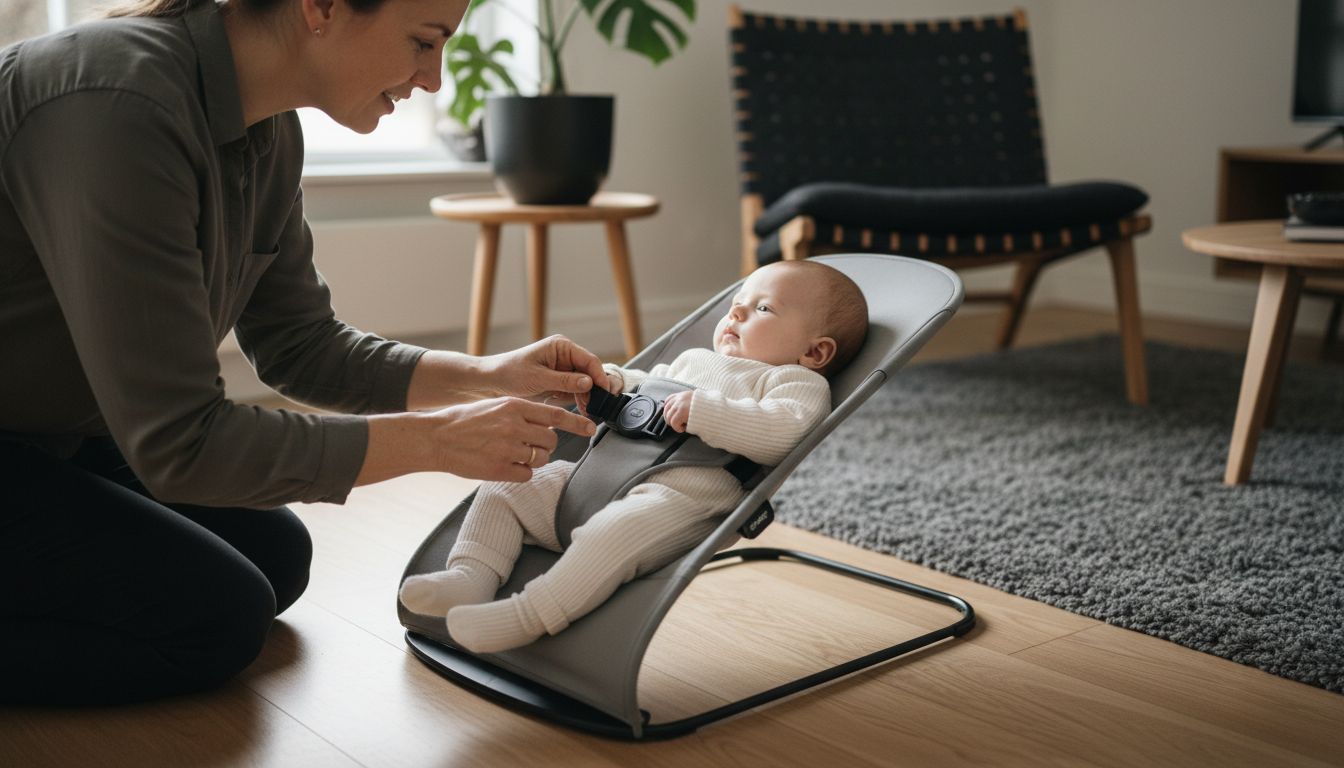
Pay attention to your babys neck and head control. For younger infants who cannot support their head independently use a more reclined position. As your baby grows and develops stronger neck muscles you can gradually adjust the bouncer to a more upright position.
Pro Tip: Always perform a gentle shake test after securing your baby to ensure the harness is properly fastened and the bouncer feels stable.
Once your baby is securely positioned you are ready to introduce gentle bouncing motions. The next step will focus on creating a safe and enjoyable bouncing experience that keeps your little one both entertained and comfortable.
Step 4: Monitor your baby's comfort and reactions
Monitoring your babys comfort and reactions in the bouncer is essential for ensuring a positive and safe experience. This step helps you understand your babys preferences and emotional state while using the bouncer.
The Centers for Disease Control recommends paying close attention to your babys signals during playtime. Watch for subtle cues that indicate how they are feeling. A content baby might coo smile or have relaxed body language. Conversely signs of discomfort could include squirming excessive fussiness or turning away.
Consumer Reports suggests starting with short bouncer sessions and carefully observing your babys responses. Some babies might love the gentle motion immediately while others need time to adjust. Keep initial sessions brief perhaps 10 to 15 minutes and gradually increase duration as your baby becomes more comfortable.
Listen to your babys sounds and watch their facial expressions. Soft gurgling and occasional smiles suggest they are enjoying themselves. Persistent crying or signs of tension mean its time to remove them from the bouncer and try again later. Every baby is different and their comfort levels can change from day to day.
Check your babys physical positioning regularly. Ensure they remain centered in the bouncer with proper head and neck support. If they seem to be sliding or appear uncomfortable make immediate adjustments. The harness should remain snug but not restrictive allowing natural movement.
Pro Tip: Trust your parental instincts. If something doesnt feel right about your babys reaction take them out of the bouncer and reassess.
As you become more familiar with your babys bouncer preferences youll develop an intuitive sense of when and how long they enjoy this space. The next step involves understanding how to make bouncer time both fun and safe for your little one.
Step 5: Adjust routines based on baby's needs
As your baby grows and develops their relationship with the bouncer changes. Learning to adapt your routine to their evolving needs ensures a positive and supportive experience for both of you.
The Centers for Disease Control emphasizes the importance of balancing bouncer time with direct physical interaction. While bouncers can be convenient they should not replace essential cuddling and holding time. Aim to use the bouncer as a supplement to your caregiving not a primary method of keeping your baby occupied.
Consumer Reports recommends limiting bouncer sessions to prevent overuse. Babies need plenty of opportunities for active movement and floor play. Start with short 10 to 15 minute intervals and watch how your baby responds. Some babies might enjoy longer periods while others prefer brief moments of bouncing.
Pay attention to your babys developmental milestones. As they gain strength and become more mobile youll need to adjust how you use the bouncer. Younger infants might enjoy more reclined positions while older babies might want more upright seating that allows them to observe their surroundings.
Create a flexible routine that incorporates the bouncer without making it the center of your babys day. Use it during times when you need your hands free like preparing meals or doing quick household tasks. But always prioritize interactive play floor time and direct engagement.
Pro Tip: Rotate between different activities to keep your baby stimulated and prevent over reliance on any single piece of baby gear.
Remember that every baby is unique. What works perfectly one week might need adjustment the next. Stay observant flexible and responsive to your babys changing needs and signals.
Here's a summary of key steps for safe and comfortable bouncer use:
| Step | Focus Area | Safety Tips |
|---|---|---|
| Prepare the Bouncer | Stable assembly<br>Flat surface | Check components<br>Test stability<br>Read manual |
| Introduce Gradually | Short sessions<br>Positive environment | Supervise closely<br>Watch baby's reactions |
| Secure Positioning | Proper harness use<br>Support head & back | Snug harness<br>Check posture<br>Adjust seat angle |
| Monitor Comfort | Observe baby cues<br>Adjust as needed | Look for fussiness<br>Limit session time |
| Adjust Routines | Flexible timing<br>Balance with play | Rotate activities<br>Respond to growth |
Find the Perfect Baby Bouncer for a Safe and Comfortable Transition
Transitioning your baby to a bouncer can feel overwhelming when safety and comfort are your top priorities. This article highlights how important it is to prepare the bouncer carefully, position your baby securely, and monitor their reactions closely. If you want to avoid guesswork and choose a baby bouncer designed to fit your home, your routine, and your baby's needs consider exploring expert reviews and detailed comparisons to help make that decision easier.
At Bouncer Lab we understand the challenges parents face finding space-efficient and safe bouncers that support healthy development. Explore our comprehensive guides for selecting infant bouncers and learn about models that emphasize stability, comfort, and ease of cleaning. Start your search at Bouncer Lab today and give your baby the secure and enjoyable bouncer experience every parent wants. Don't wait wait until your baby becomes restless or uncomfortable act now to find the ideal bouncer that fits your lifestyle.
Frequently Asked Questions
How do I prepare my baby's bouncer for its first use?
Start by unpacking the bouncer and checking all components against the manufacturer's manual for any damage or missing parts. Assemble it according to the instructions, ensuring the frame is stable and on a flat surface.
What is the best way to introduce my baby to the bouncer?
Introduce your baby to the bouncer gradually by starting with short sessions of about 10 to 15 minutes when they are calm. Engage with your baby during these sessions to create a positive association with the bouncer.
How should I position my baby securely in the bouncer?
Ensure your baby is centered in the bouncer with their bottom deep in the seat. Use the safety harness snugly, allowing space for two fingers between the harness and your baby's body to keep them secure but comfortable.
What signs should I look for to monitor my baby’s comfort in the bouncer?
Look for cues like smiles and relaxed body language, which indicate your baby is comfortable. If they show signs of fussiness or tension, remove them from the bouncer and try again later.
How can I adjust my routine to accommodate my baby's needs while using the bouncer?
Create a flexible routine by balancing bouncer time with interactive play. Limit bouncer sessions to 10 to 15 minutes and be responsive to your baby's changing preferences and developmental milestones.
How do I ensure safe bouncing motions for my baby in the bouncer?
Once your baby is securely positioned, gently introduce bouncing motions. Start slowly and observe how your baby responds, ensuring they feel safe and entertained during the experience.
Related Articles