Montessori Baby Bouncer: Space-Safe Movement Essentials
By Priya Menon • 18th Jan
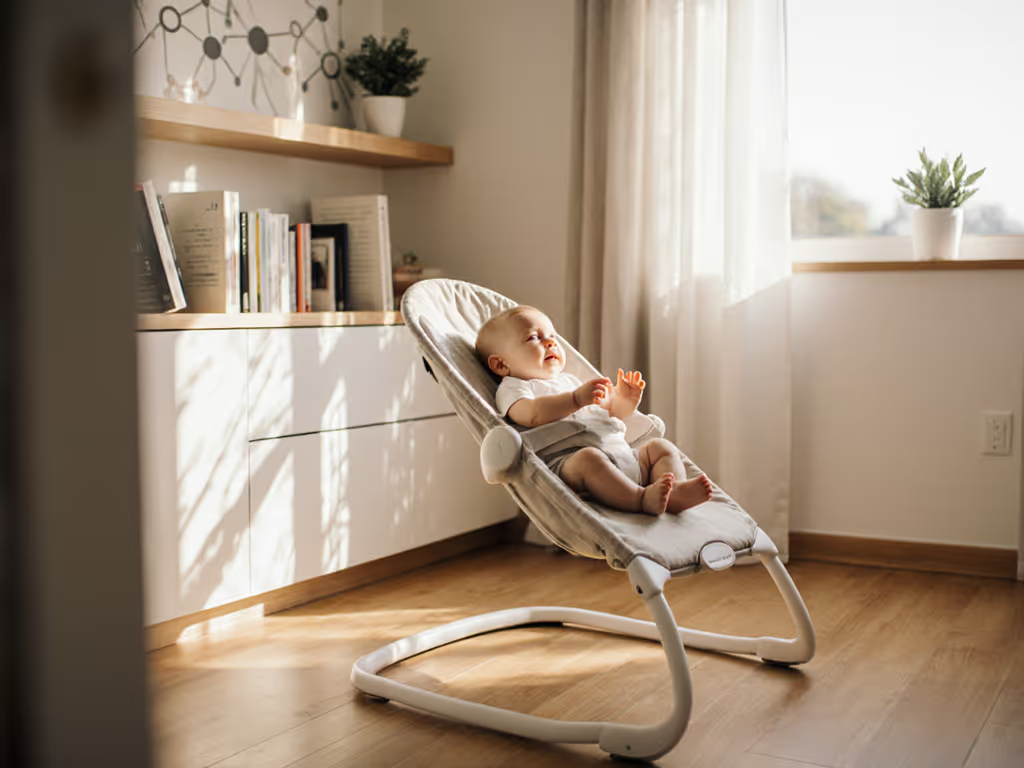
When your New York studio apartment feels smaller with each newborn breath, the promise of a "Montessori baby bouncer" offers hope. But what does that actually mean in your tight quarters? As a parent educator who's helped hundreds of urban families integrate evidence-based infant gear, I know the struggle: you want hands-free moments without compromising safety or swallowing your living space. Let's cut through the marketing: safety lives in routines, not marketing claims or modes. This guide translates infant seating research into space-conscious habits you can actually practice when exhausted. Remember: the device is not a nap spot. It is a tool for supervised exploration with clear boundaries.
What Makes a Bouncer Truly 'Montessori'?
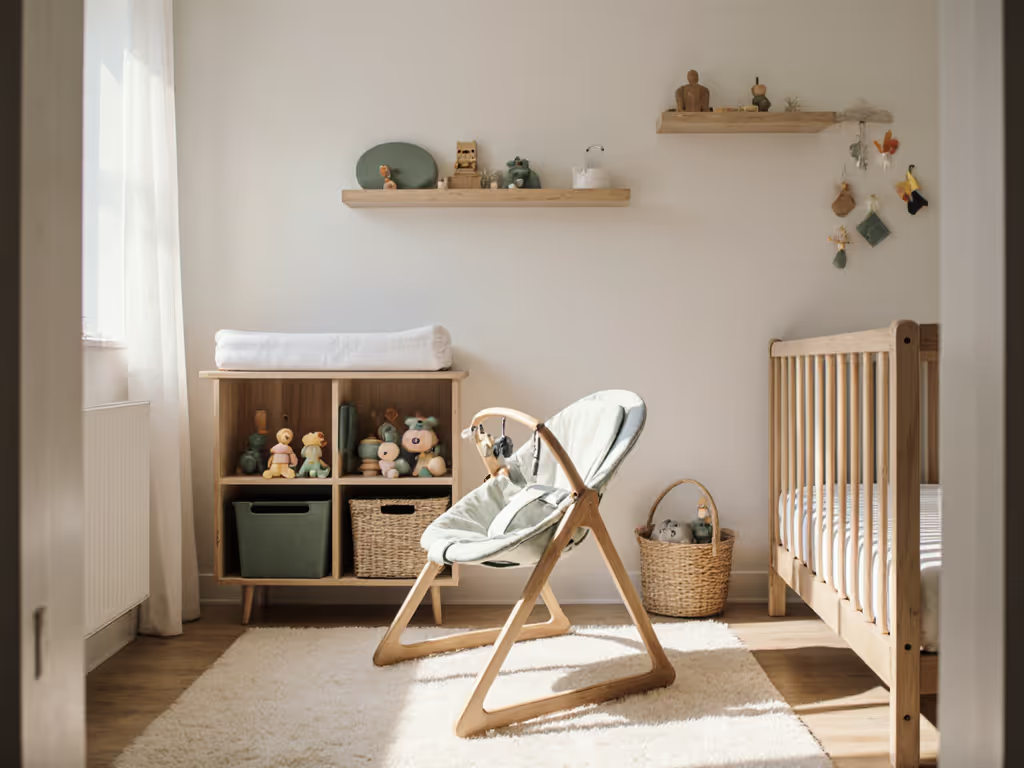
Montessori philosophy centers on respecting infant autonomy within safe parameters. A true Montessori baby bouncer isn't about branding (it's about design supporting natural development). Look for:
- Minimal visual stimulation (no flashing lights or loud toys)
- Self-directed movement (gentle bounce activated by baby's motions, not motors)
- Ground-level stability (low center of gravity that won't tip on hardwood)
- Breathable materials that don't restrict airflow
This differs from traditional baby gear designed to "entertain" through sensory overload. If you’re deciding between responsive bounce and powered motion, see our automatic vs manual bouncer guide. As one Chicago parent told me, "I need gear that blends with my living room, not screams 'baby prison'." That is respectful infant seating, prioritizing baby's developing body over parent convenience.
How Do I Align Bouncer Use with Montessori Principles?
The Montessori approach emphasizes baby-led bouncer use within strict safety parameters. This means:
- Never forcing participation: Place baby in the bouncer only when they're calm and alert
- Observing body cues: Withdraw at first signs of distress (arching back, frantic movements)
- Time-limited sessions: 10 to 15 minutes max for newborns, always supervised
- Prioritizing floor time: Bouncer use should complement (not replace) tummy time on firm surfaces
Dr. Maria Montessori's writings stressed "freedom within limits." Apply this by setting timers: "When my alarm chimes at 12 minutes, I know it's time to lift baby to the floor mat (even if they're still content)." This builds the routine-conscious mindset exhausted caregivers need.
What Safety Features Are Non-Negotiable?
Pediatric guidelines confirm that Montessori-approved bouncers must include:
- Five-point harness (never aftermarket modifications)
- Non-slip base that won't slide on wood/tile
- Reclined position (30-45 degrees for newborns) Get practical positioning tips to set the correct angle and avoid chin-to-chest slumping.
- No dangling toys in the newborn phase
The CPSC reports 12 suffocation fatalities between 2006 and 2016 linked to bouncers on soft surfaces. Review essential bouncer safety guidelines for correct harness use, placement, and safe time limits. Your small-space reality requires extra vigilance: never place the bouncer on a bed, sofa, or counter (just the floor). That time I helped a parent circle member who had been letting her newborn nap in the bouncer? We practiced moving her to a crib within 20 minutes using my phone timer. Short, supervised stints created calm without risk.
Can 'Minimal Intervention Baby Gear' Replace Supervision?
No. This is where marketing misleads tired parents. Minimal intervention baby gear still requires maximal awareness from you. The moment you step into another room (even to grab a water bottle) you've crossed into unsafe territory. Position the bouncer where you'll naturally pass through (kitchen entry, home office doorway) so you glance at baby every 60 to 90 seconds.
Evidence is clear: Positional asphyxia can occur in under 2 minutes if a baby's chin tucks to chest. A 2023 Pediatrics study confirmed that 92% of incidents happened when caregivers believed "just a minute" was safe. Set your phone timer for 8-minute intervals to check breathing patterns.
How Do I Integrate This Into My Small-Space Routine?
Urban parents master spatial creativity. Try these space-safe routines:
- Kitchen sync: Position the bouncer near your cooking zone (but away from hot surfaces). When the pasta water boils, pause to smile at baby, then reset your 10-minute timer.
- Fold-flat storage: Choose models that collapse flat for under-sofa storage. Measure your tightest space before buying (most "compact" models need 18" depth when folded). For layout hacks that free up inches, don’t miss our space-saving bouncer tips.
- One-hand deployment: Test if you can unfold the frame while holding baby. If not, it will not work during those precious quiet moments.
I have seen parents in 500-square-foot apartments thrive by treating bouncer time like a "breathing break" (not a sleep solution). They set two timers: one for baby's safe use window (10 to 15 min), another for their own self-care ("I'll sit with my tea for 8 minutes while baby bounces").
Safety is a routine you practice, not a feature you buy.
What Are Realistic Time Limits for Baby-Led Use?
Follow these evidence-based intervals:
- Newborns (0 to 2 months): 10 minutes max, 2 to 3 times daily
- Infants (2 to 4 months): 15 minutes max, 3 to 4 times daily
- Older babies (4+ months): Stop when baby attempts to roll or sit unassisted At this stage, use our rolling milestone safety guide to transition your routine.
The "20-minute rule" some brands advertise? Too long for developing airways. A recent AAP report confirms that even 15 minutes demands vigilant supervision. Use your phone's timer with haptic feedback (you will feel the alert through kitchen counter vibrations during WFH calls).
Actionable Next Step: Start With Your Space
Measure your tightest storage spot now (under bed? closet depth?). Then download our free Small-Space Bouncer Checklist: it includes:
- Floor footprint requirements for top space-saving models
- Decibel ratings for quiet operation (verified in real apartments)
- Visual guide to safe recline angles
- Timer-based usage schedule for exhausted parents
This takes 90 seconds but prevents buyer's remorse. When you're holding a sleeping newborn at 3 AM, you'll thank today's you for setting those space-safe routines. Because in your compact world, every square inch, and every minute, must work with your baby's development, not against it. Remember: the safest bouncer is the one used correctly within your family's rhythm. The device is not a nap spot; it is a tool for mindful moments within your safe, loving space.
Related Articles

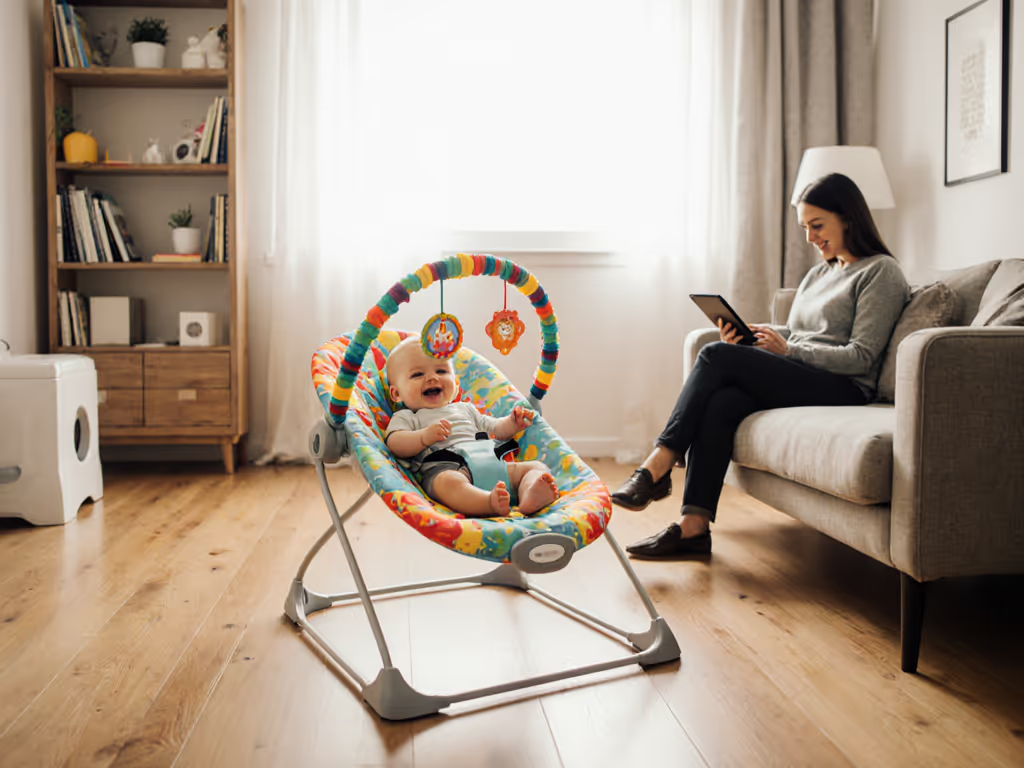
Bouncer Basics, Benefits & Alternatives
Infant Activity Bouncer Safety: Your Routine Guide
Learn evidence-based routines to use an infant bouncer safely in small spaces - hard-floor placement, snug straps, 20-minute supervised sessions, and stopping when baby starts to sit or push up. Keep it off beds, sofas, and counters and never for sleep to reduce suffocation and fall risks.
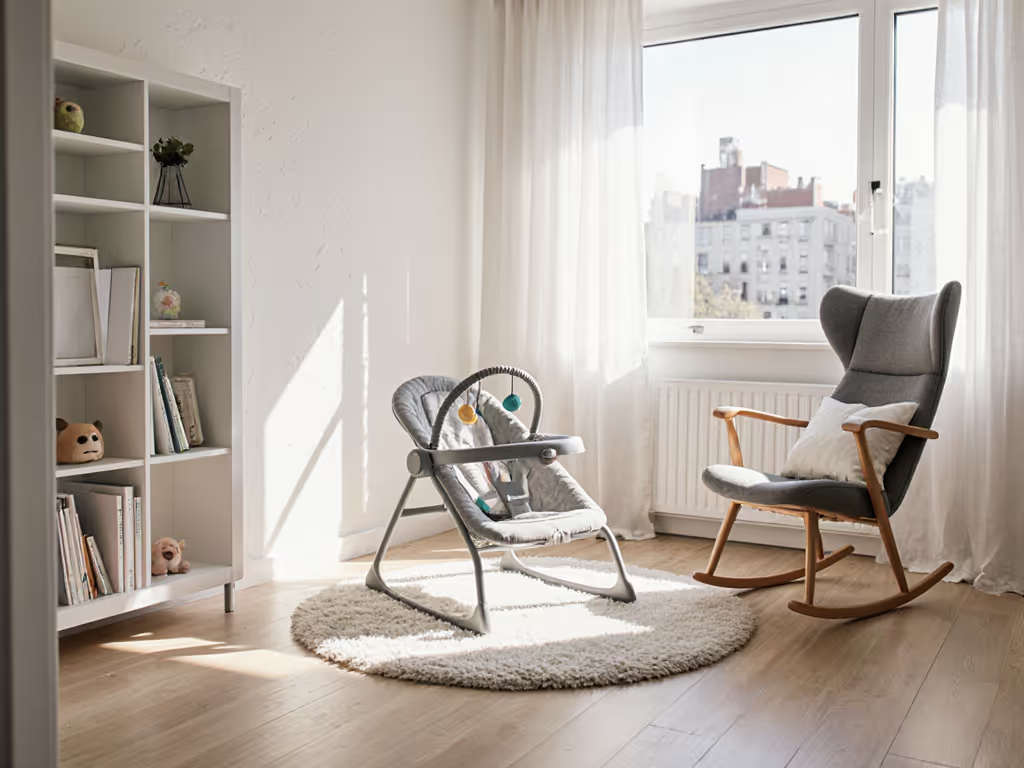
Bouncer Basics, Benefits & Alternatives
Infant Activity Bouncer Guide: Space-Saving & Safe
Choose a compact, quiet, easy-to-clean bouncer that truly fits tight spaces and know where to place it. Integrate it safely with floor-only use, snug restraints, milestone-based stop dates, and a simple 5-minute checklist.
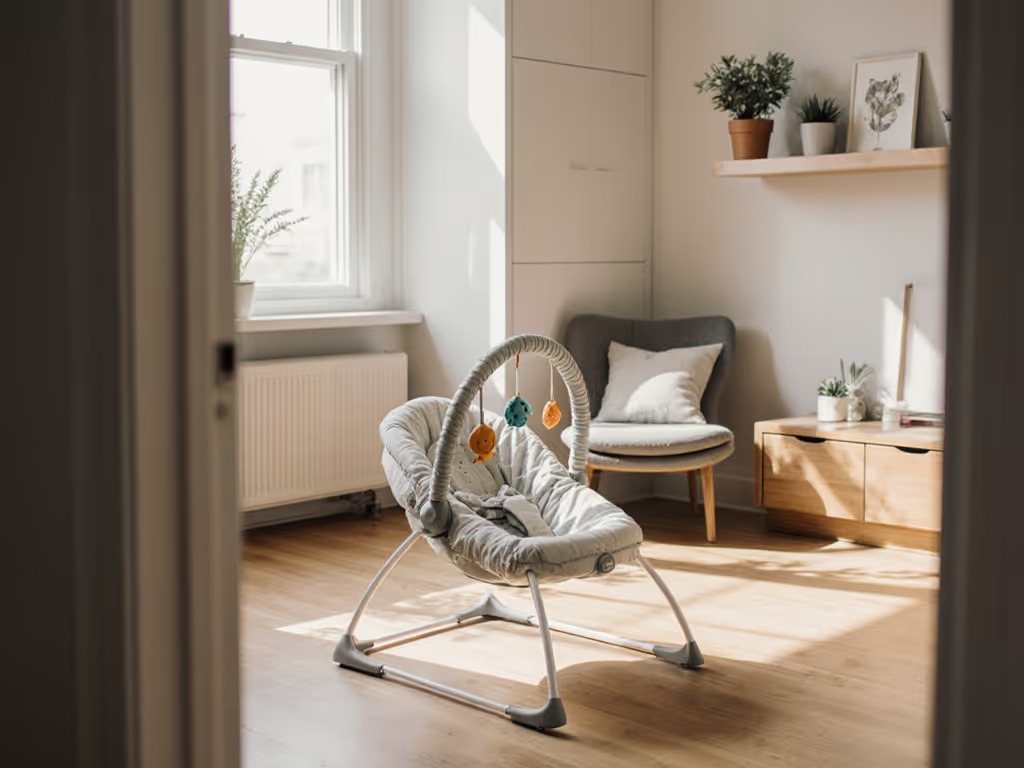
Bouncer Basics, Benefits & Alternatives
Infant Activity Bouncer: Developmental Benefits, Small Footprint
Get clear on bouncers’ real, time‑bound developmental benefits and safe usage limits. Use small‑space metrics - compact footprint, under 40 dB noise, and under 90‑second cleaning - to choose a model that won’t disrupt sleep or flow, or skip it entirely.