Bouncer Neuroscience: How Movement Builds Infant Brains
By Kenji Sato • 19th Feb
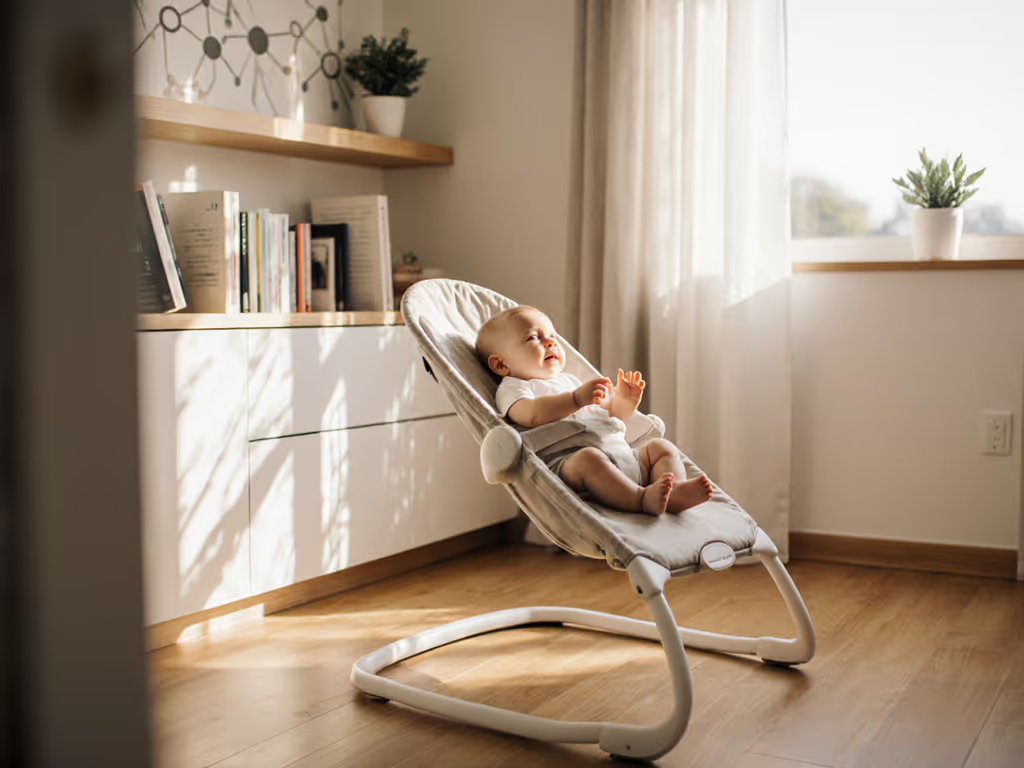
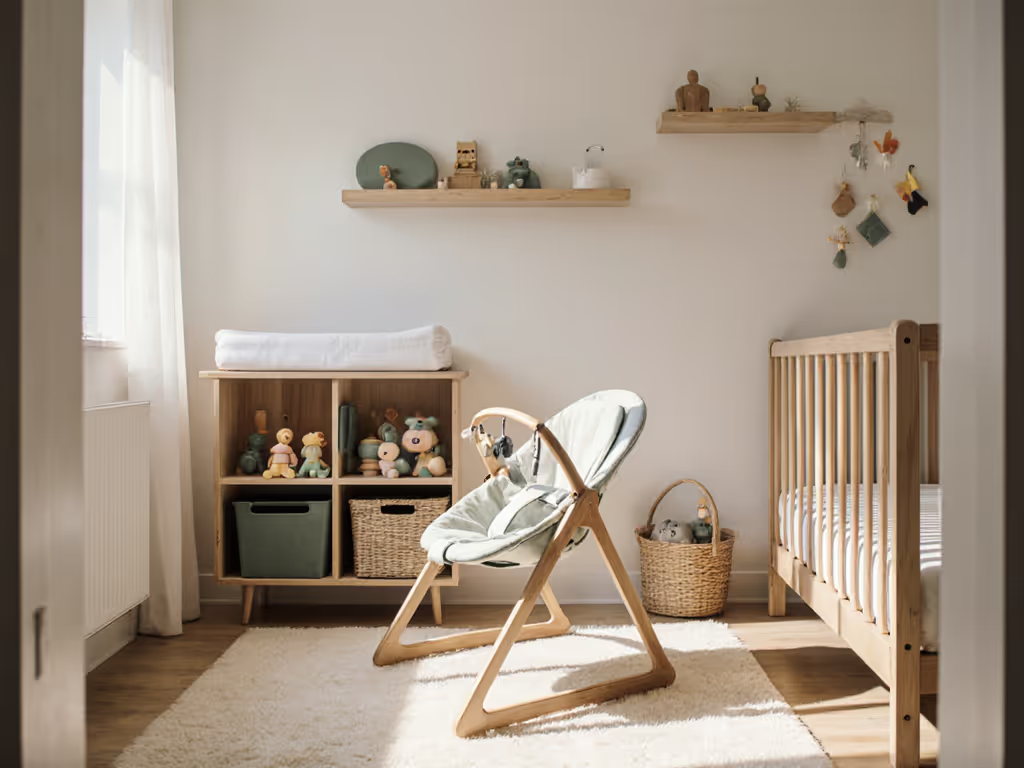
You see a small bouncer seat. Your brain sees a toy that'll clutter the hallway. But from a neurological standpoint, a well-chosen bouncer is infrastructure, a place where bouncer neuroscience operates quietly, reshaping how your infant's brain learns to process the world. Understanding what happens inside that developing brain during bounce time shifts how you evaluate which seat deserves floor space in a footprint-conscious home.
The science isn't mysterious. Infant brains are actively wiring themselves based on movement, sensory input, and responsive interaction. A bouncer that responds to your baby's movements (and stays whisper-quiet while doing it) becomes more than soothing apparatus. It becomes a tool for neural pathway formation. Here's how the mechanics work, and why the right model matters in tight quarters.
1. Movement Triggers Motor Skill Development Through Real-Time Feedback
From birth, babies are learning to coordinate muscle groups and understand cause-and-effect. When a bouncer responds to your baby's weight shifts and limb movements, it creates immediate sensory feedback. A baby kicks; the seat sways. That responsiveness teaches the infant nervous system that its body controls its environment, a foundational concept in motor development.[1] For stage-by-stage ideas, see our motor skills guide.
Bouncers optimized for this loop have a low center of gravity and smooth, dampened motion. Stiff, non-responsive seats miss the feedback signal entirely. Movement-responsive bouncers encourage fine motor work: reaching for a toy bar, grasping, tracking motion with eyes. Each interaction strengthens neural circuits governing coordination and spatial awareness.
The practical angle: a bouncer with tight footprint and stable feet that won't slip or scuff floors becomes a compact partner in motor skill building. If it parks slim behind furniture and weighs light enough to move one-handed between rooms, it's more likely to stay in active rotation, not abandoned in a closet.
2. Rhythmic Sensory Input Builds Neural Connections for Pattern Recognition
Infant brains are pattern-detection machines. Researchers at Northeastern University found that when caregivers behave predictably during early interactions, infants' brains become better at learning new patterned information (even six months later).[3] The mechanism: babies' brains activate more strongly when processing predictable versus random stimuli, a sign of learning efficiency.
A bouncer amplifies this. Gentle, consistent rhythm (the kind a well-engineered mechanical seat provides) creates reliable sensory input. Paired with visual elements (a toy bar, contrasting shapes) or the caregiver's face nearby, that rhythm becomes predictable patterning. Your baby's brain tracks the pattern, anticipates the cycle, and strengthens the neural circuits underlying attention and memory formation. [1]
The quiet part matters. Squeaks, motor hums, or irregular stops-and-starts break rhythm and inject unpredictability that destabilizes learning. If you're choosing between two bouncers with similar motion profiles, the one with matte materials, sealed joints, and no rattles supports deeper focus, protecting the sensory environment of anyone nearby working or sleeping in thin-walled space.
3. Multimodal Sensory Stimulation Strengthens Cognitive Pathways
When a baby experiences movement, visual input, and sound (or movement, touch, and caregiver proximity) simultaneously, multiple sensory pathways activate at once. This multimodal input triggers what neuroscience calls "multisensory integration": the brain's ability to bind different sensory channels into coherent experience.[1]
Bouncers facilitate this naturally. The physics of the bounce engages the vestibular system (balance and spatial awareness). A toy bar within reach engages visual tracking and fine motor planning. A caregiver sitting nearby and talking engages auditory processing and social cognition. That simultaneous firing across sensory streams creates dense neural connectivity, the hardware underlying problem-solving, spatial reasoning, and later language skills.
The design implication: less visual clutter, intentional toy choice, and neutral materials ensure sensory input remains signal, not noise. A bouncer with muted colors, simple geometry, and optional (not mandatory) toy attachments lets parents calibrate sensory load rather than defaulting to maximum stimulation. It's the quiet bouncer that teaches calm focus, not the one drowning in patterns and sounds.
4. Predictable Caregiver Behavior + Responsive Seat = Synchronized Brain Development
Recent neuroscience reveals that mother-infant brain synchrony (aligned neural activity during interaction) is highest when caregiving is sensitive and predictable, rather than intrusive or chaotic.[4] The caregiver's calm, attuned presence literally shapes the infant's social brain maturation during critical early months.
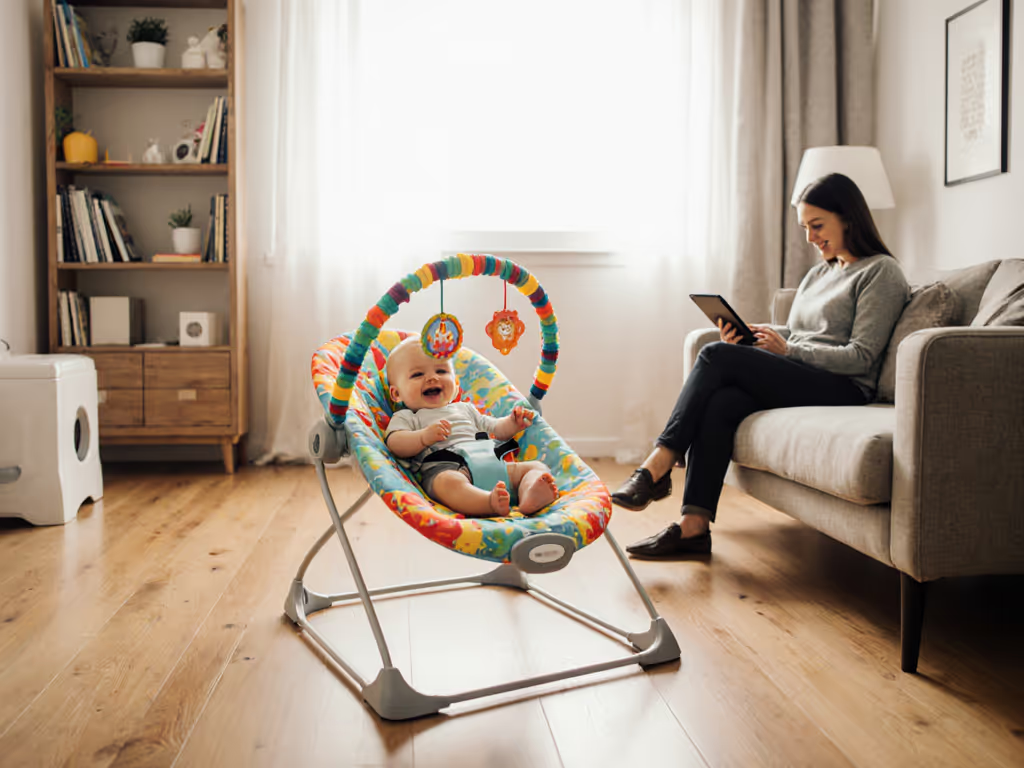
A bouncer enters this system as an enabler. If a bouncer keeps your baby safely soothed and engaged for 15-30 minutes, it frees you to be present but not hovering (to make lunch, answer an email, or simply breathe). Your baby experiences the bounce rhythm + your nearby presence without the overstimulation of constant handling. That predictable independence becomes part of the synchronized feedback loop. The infant learns: "I can be calm; my caregiver is nearby and predictable; the world feels manageable."
This is why noise matters again: a silent bouncer lets you stay mentally present. A squeaky or motorized one pulls your attention outward, disrupting the quiet attunement that drives neural synchrony.[4]
5. Safe Positioning Supports Brain Development Without Worry
Neurological development cannot happen in a state of chronic parental anxiety. A bouncer with a stable, low base; secure, properly-fitted harness; and breathable materials removes a cognitive load from your plate. You're not running through a mental checklist every time your baby settles into it. Safety-first design (non-slip feet that won't scuff flooring, zero sharp edges, certifications you trust) becomes invisible infrastructure. For clear guidance on when to stop using a bouncer, see our critical age and weight guidelines.
When you're not managing safety worry, your presence with your baby shifts. That calm presence is the final, essential ingredient in the neural synchrony research: maternal sensitivity and low intrusiveness predict enhanced brain-to-brain coordination during the first year of life.[4] A well-designed, low-anxiety bouncer is part of the architecture that allows that sensitivity to flourish.
6. Practical Deployment Drives Consistent Use, and Consistent Learning
Neuroscience insights mean nothing if the bouncer stays in a closet. A compact seat with true fold-flat storage, a weight you can lift and move one-handed, and a footprint that doesn't command the room becomes something you actually use, day after day, building cumulative neural benefits.
The design philosophy: if it stores slim and wipes fast, it stays. Park it, don't parade it. A neutral matte finish, removable and machine-washable cover, and wipeable frame mean cleaning takes minutes, not a production. Keep it in rotation with our bouncer cleaning guide. A baby's messy reality (spit-up, blowouts, morning milk leaks) won't doom the seat to the basement. It stays active in daily rotation, delivering consistent sensory and motor input across weeks and months. That consistency is where real neural pathway formation happens.
7. Age-Range Flexibility Extends the Window for Continued Neural Building
Bouncers with adjustable recline and sturdy frames can evolve with your baby: from newborn (more reclined, with head support) to 4-6 months (more upright, encouraging reach) to crawler stage. This continuity means the bouncer keeps supporting sensory integration and motor development across a longer window. Your baby's neural pathways for balance, coordination, and spatial reasoning get months of consistent reinforcement rather than eight weeks before the seat gets outgrown.
From a space perspective, this is math that works: one versatile bouncer that adapts beats buying two or three single-use seats. The footprint stays constant, the utility compounds, and the resale value holds because families recognize that longevity.
Further Exploration
The neuroscience of infant development is evolving rapidly, and the link between physical design and neural outcomes remains under active study. If you want to deepen your understanding, explore research on infant vestibular development, caregiver synchrony, and early sensory integration. Look for peer-reviewed studies on how consistent, rhythmic input shapes attention and memory formation in the first year. When evaluating gear, ask: Does this seat create predictable feedback? Will I actually use it long-term? Is it safe without stealing my mental bandwidth? Can I keep it clean without friction? Those practical questions map directly to the neuroscience, because good design is quiet, easy to stash, and easy to wipe. Your infant's brain will do the rest.
Related Articles

Bouncer Basics, Benefits & Alternatives
Infant Activity Bouncer Safety: Your Routine Guide
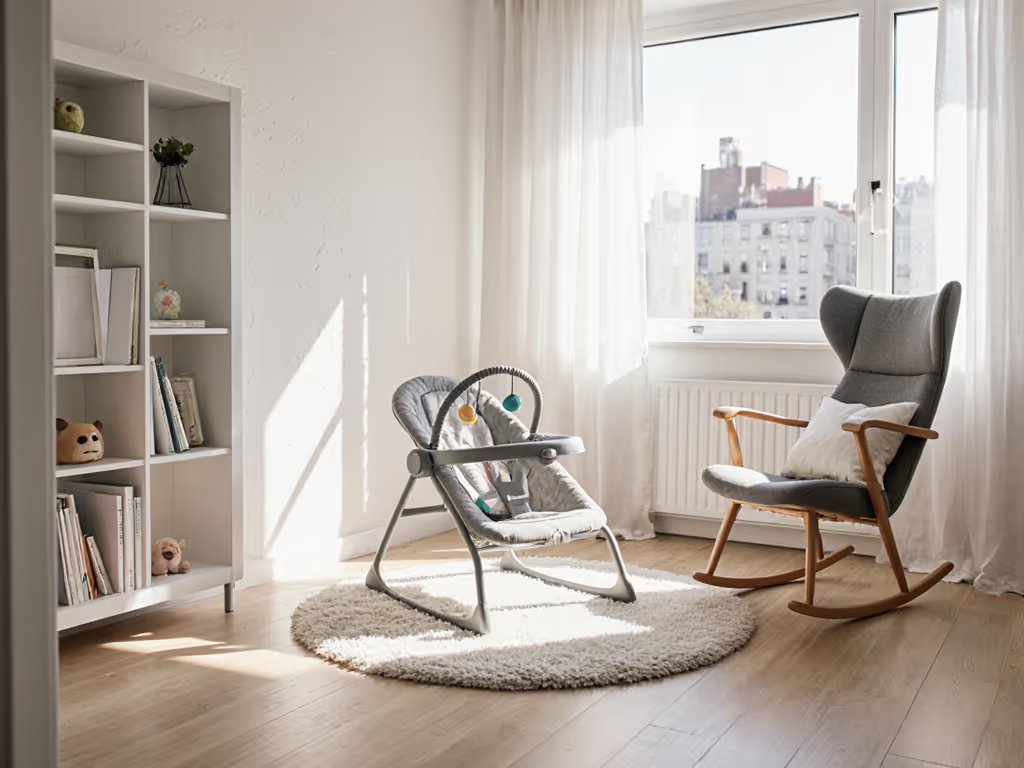
Learn evidence-based routines to use an infant bouncer safely in small spaces - hard-floor placement, snug straps, 20-minute supervised sessions, and stopping when baby starts to sit or push up. Keep it off beds, sofas, and counters and never for sleep to reduce suffocation and fall risks.
Bouncer Basics, Benefits & Alternatives
Infant Activity Bouncer Guide: Space-Saving & Safe
Choose a compact, quiet, easy-to-clean bouncer that truly fits tight spaces and know where to place it. Integrate it safely with floor-only use, snug restraints, milestone-based stop dates, and a simple 5-minute checklist.
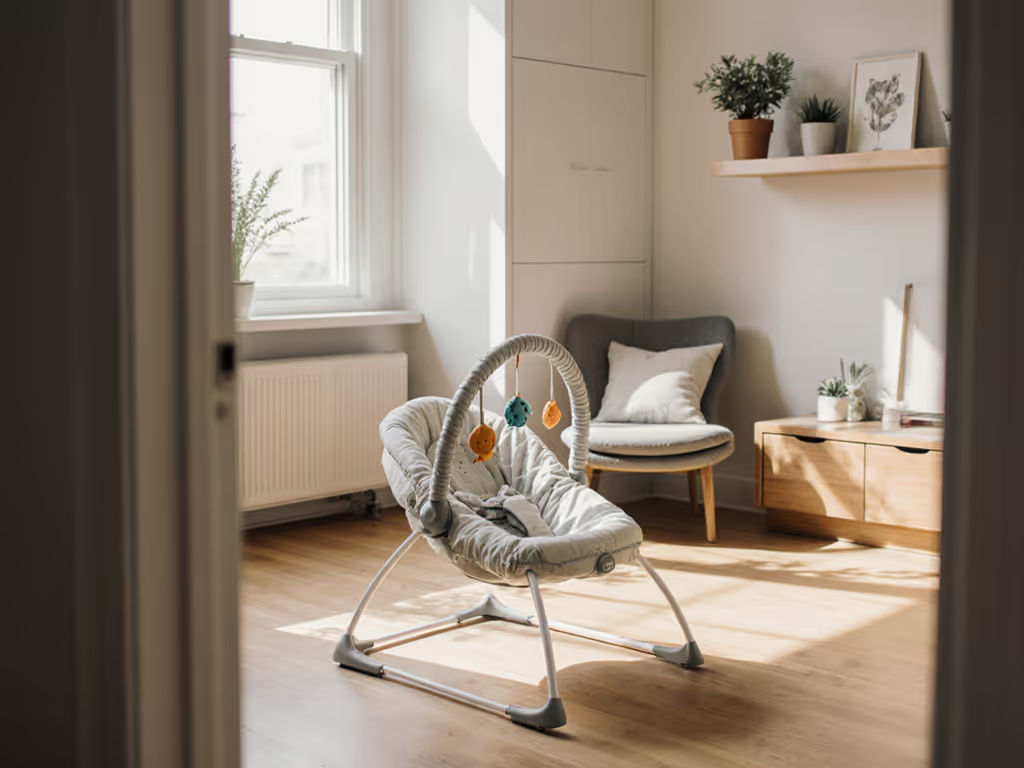
Bouncer Basics, Benefits & Alternatives
Infant Activity Bouncer: Developmental Benefits, Small Footprint
Get clear on bouncers’ real, time‑bound developmental benefits and safe usage limits. Use small‑space metrics - compact footprint, under 40 dB noise, and under 90‑second cleaning - to choose a model that won’t disrupt sleep or flow, or skip it entirely.