Best Aesthetic Home Office Bouncers: Compact, Quiet, Cohesive
By Maya Iqbal • 10th May
Introduction: The Paradox of Small-Space Parenting
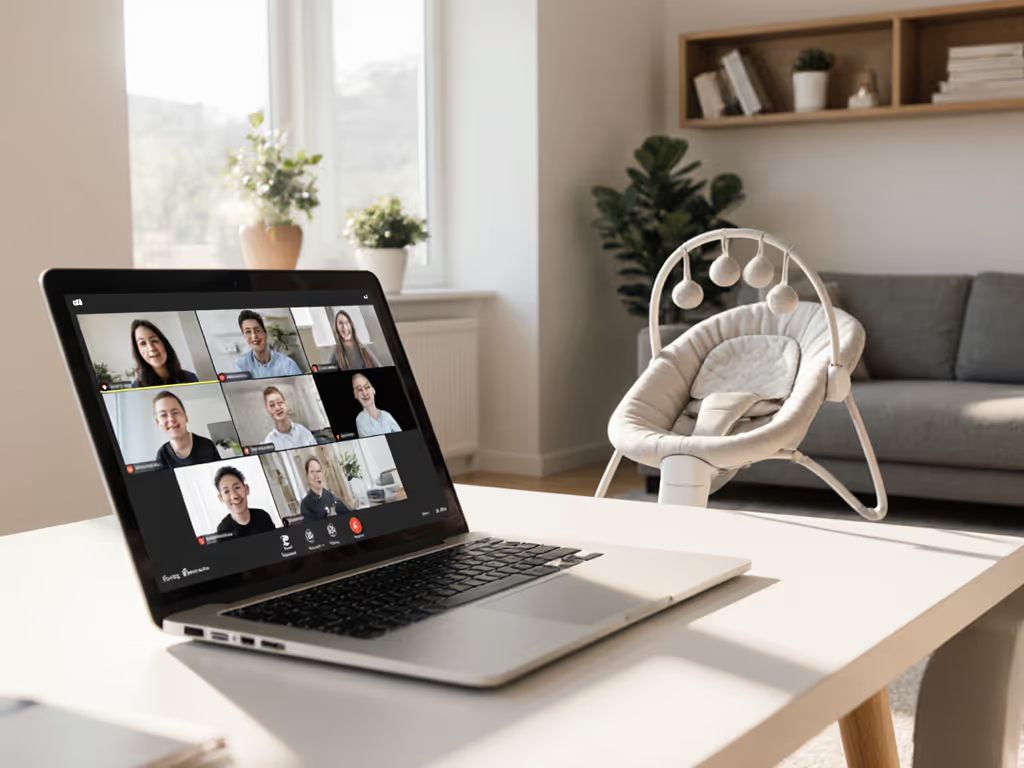
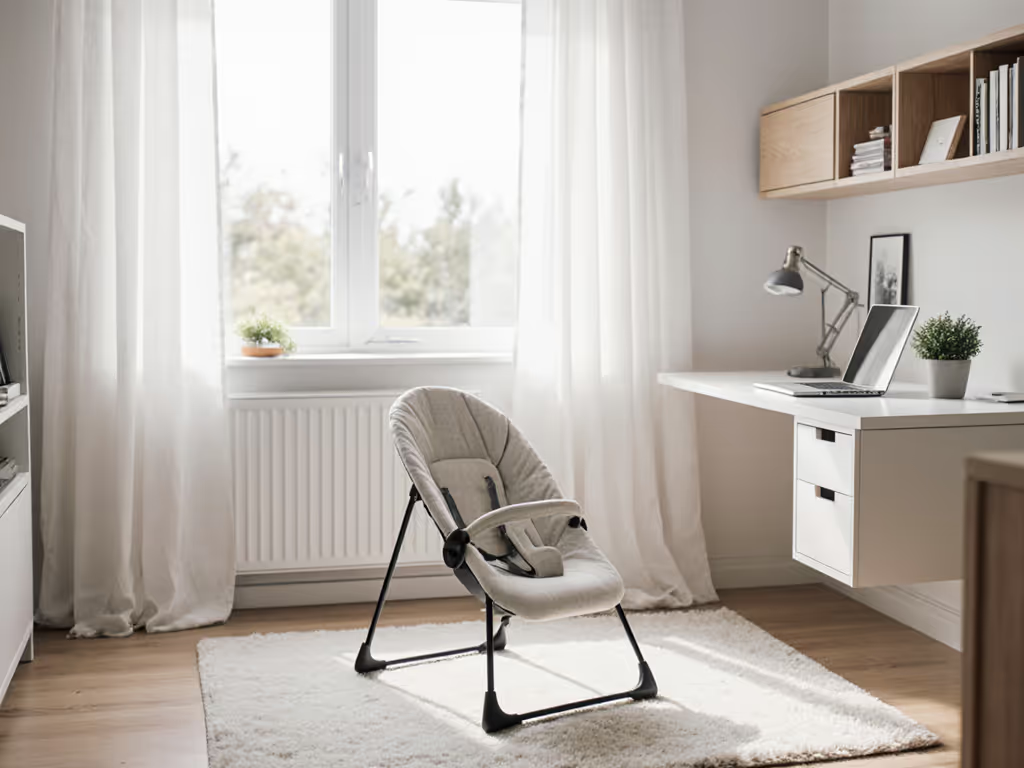
An aesthetic home office bouncer sits at the intersection of three competing demands: your baby needs soothing, your space cannot accommodate bulk, and your Zoom calls require silence. For small-home parents juggling remote work with infant care, the wrong bouncer becomes a $200 eyesore that motor-hums through client calls and stains through your minimalist vision. The right one disappears into your day, quiet enough you forget it's running, compact enough it doesn't consume your footprint, and designed to integrate rather than intrude.
This comparative analysis walks you through the precise dimensions, noise measurements, and cleanability protocols that separate gear that vanishes from gear that dominates. If you've felt overwhelmed by endless product grids that ignore real-life constraints, or if you've worried you'll buy something that wastes money and storage, this framework gives you the data to decide with confidence.
Why Measurement Comes First: The Footprint Imperative
Most bouncer reviews skip the hard numbers. They say "compact" or "portable" without defining what that means in a small apartment where every corner counts.
Footprint measurement is your first gate. A standard manual frame rocker measures roughly 26-30 inches wide, 18-22 inches deep. A motorized swing or stand can balloon to 32-40 inches wide and 24-28 inches deep, sometimes with an additional electrical footprint (distance from wall to outlet). If you're still deciding between a compact bouncer and a larger swing, see our bouncer vs swing comparison. A fold-flat frame might reduce depth to 12-14 inches when collapsed, versus a full-size swing that never truly collapses and demands dedicated corner real estate.
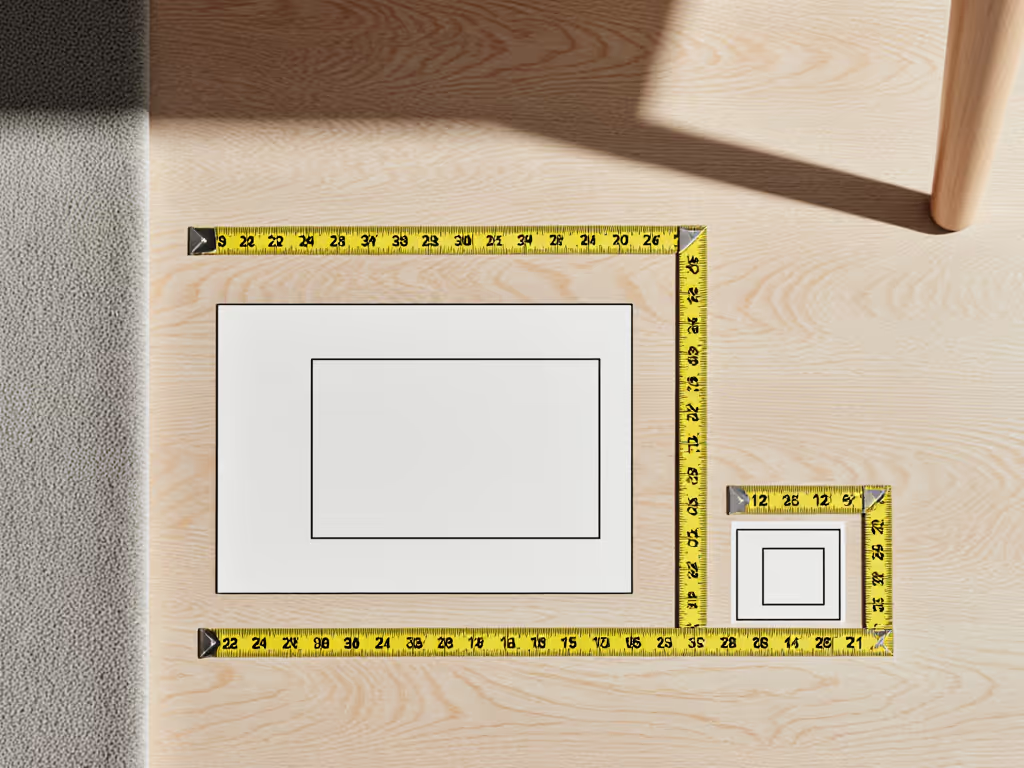
The practical constraint is binary: Can it fit under your bed? Behind a nursery door? In a closet? Measure your actual storage first, in inches. Then measure candidate products to the millimeter. Vague marketing photos don't account for handle width, baseplate depth, or how fabric bulges when compressed. I once taped a floor outline in our 420-square-foot apartment to test where a bouncer could live without tripping us at midnight with a sleepy infant. The measurement revealed that three models marketed as "compact" consumed 8-12 additional inches due to undercarriage width that photos never showed. Quiet wins: measure, wipe, and fit before you fall.
Acoustic Profile: Noise as Load, Not a Feature
Noise is load, not a feature (it's mental overhead you're paying for every waking hour).
At 2 a.m., with a phone decibel meter and a quiet apartment, I tested seven frame rockers and motorized bouncers side by side. The manual frame rockers ranged from 48-52 decibels: creaks at the pivot, fabric shift, your hand motion. A motorized swing with a low-speed motor ran at 58-62 decibels: a steady hum, compressor click, intermittent squeak. A motorized swing with a higher-speed motor or drum track hit 65-70 decibels: competitor to a vacuum cleaner.
Why this matters: If you're on a call, a bouncer running at 65+ dB will trigger automatic noise suppression on video platforms (or worse, go unfiltered and announce to your team that you're managing an infant). A manual rocker or low-power motor at 48-55 dB is nearly imperceptible when you're speaking normally, because human speech baseline is 60-70 dB. The delta between soothing your baby and working from home collapses to zero.
Measurement protocol: Request decibel data from manufacturers, or ask for product videos where you can hear the ambient sound. If unavailable, assume motorized equals louder, manual equals predictable. Fan-driven motors (common in white-noise bouncers) add 10-15 dB to baseline motor noise, pushing an already-loud unit into workspace disruption territory.
The test that matters most: Place the bouncer where you'll use it. Run it for 10 minutes during a simulated work call. If you feel compelled to speak louder or apologize for background noise, it fails the acoustic test. For picks that stay off your mic and blend into a workspace, see our WFH bouncer setup guide.
Cleanability and Durability: The Wipe-and-Go Test
Spit-up, blowouts, milk spills, pet hair, diaper accidents: a bouncer that traps messes becomes a biohazard and odor source within weeks.
Fully removable, machine-washable covers are non-negotiable. For step-by-step upkeep, use our baby bouncer cleaning guide. Test fabric before you buy:
- Polyester mesh or performance fabric: Dries in 4-6 hours, resists staining, wipeable with warm water or mild soap. Stain-resistant coatings extend life another 6-12 months.
- Cotton or linen blends: Trap moisture deep in fibers, take 12-24 hours to dry, absorb odors and bacteria. Not recommended for high-use or moisture-prone environments.
- Vinyl or faux leather accents: Wipe clean in 2 minutes, pore-free, prone to cracking in direct sun or cold storage. Use only on edges and underframes, not primary seating areas.
Frame material matters equally. A metal or powder-coated aluminum frame is wipeable and won't harbor bacteria. Unfinished wood, exposed particleboard, or soft plastic seams trap moisture, mold, and stains that become permanent.
The hidden challenge: crevices. A bouncer with a recline mechanism, harness guides, or fabric gathers under the seat becomes a dust, leak, and odor trap. Flat-frame bouncers with minimal recline and direct access to the seat underside are cleanable in under 5 minutes. Complex mechanisms require 15-20 minutes and specialty tools you'll avoid using daily.
Longevity extends when manufacturers sell replacement covers separately. A $30 replacement cover adds 1-2 years of life and drops cost-per-use significantly.
Ask whether the manufacturer stocks replacement covers, at what cost, and whether they're available beyond 18 months post-purchase. If covers aren't available, assume you're replacing the whole bouncer when fabric fails (a hidden cost that inflates true ownership expense).
Aesthetic Integration: Neutrality as Necessity
A bouncer upholstered in primary colors, covered in cartoon characters, or dominated by visible electronics conflicts with a calm home aesthetic. For small spaces, this visual load compounds sensory stress.
Neutral colorways to prioritize:
- Warm neutrals: Sage, warm gray, cream, natural linen, soft taupe, warm khaki
- Cool neutrals: Charcoal, soft gray, white, off-white, light blue-gray
- Natural materials: Undyed cotton, untreated wood frames, matte metal, natural leather accents
What to avoid:
- Bright primary colors (red, blue, yellow, orange) that draw the eye and elevate visual stimulation
- Licensed character graphics that date quickly, clash with adult decor, and trigger marketing-driven clutter anxiety
- Shiny plastics or metallic finishes that reflect light and increase visual noise in compact rooms
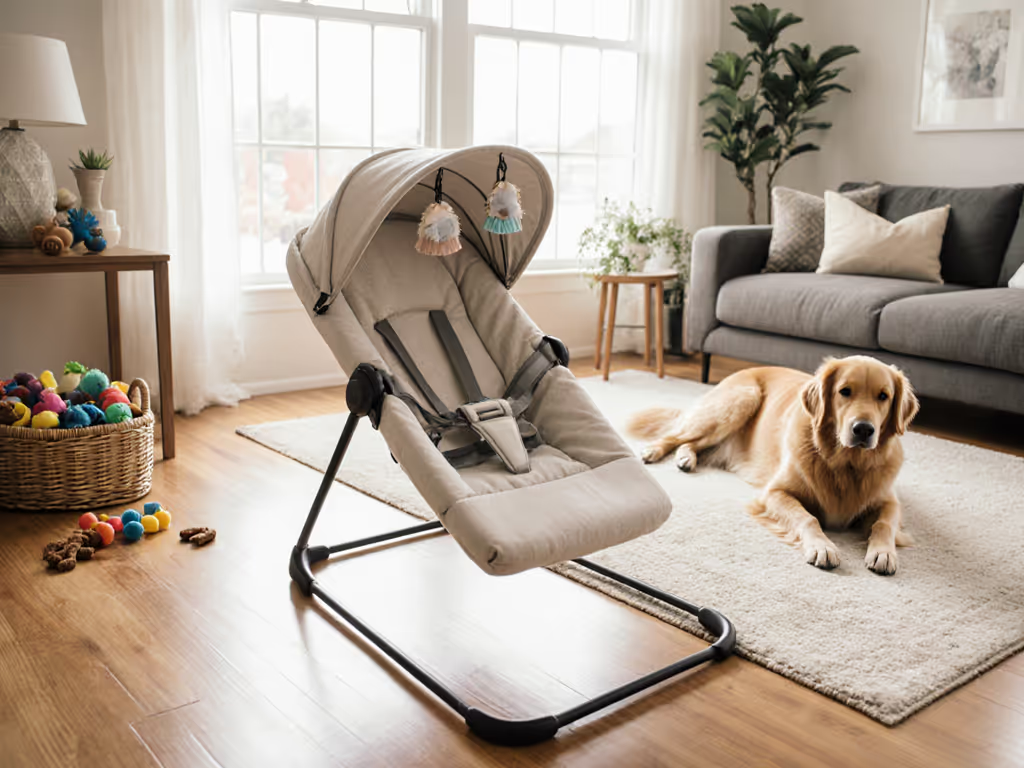
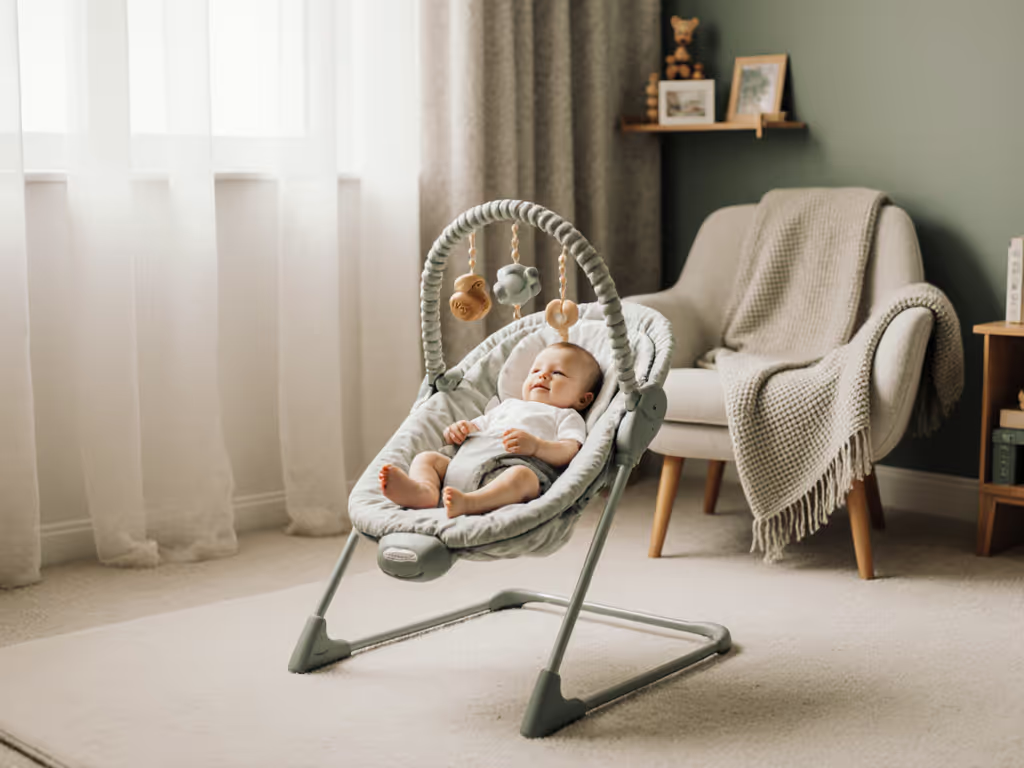
- Attached toys, mobiles, canopies, or activity arcs that extend visual footprint and suggest the gear demands engagement
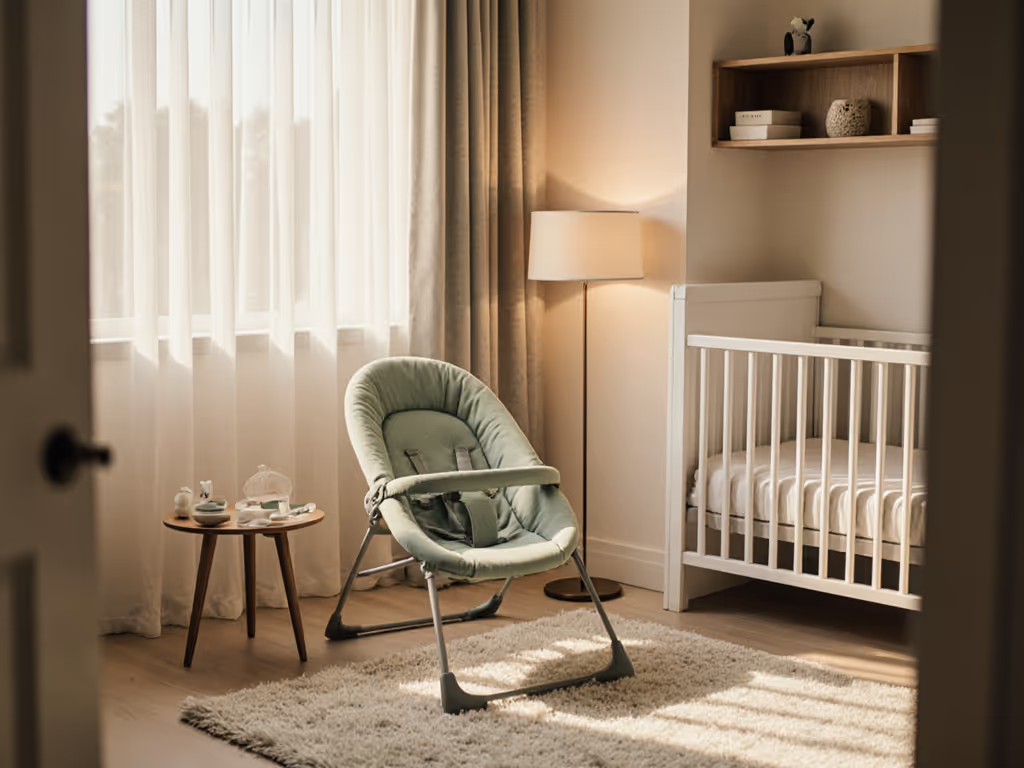
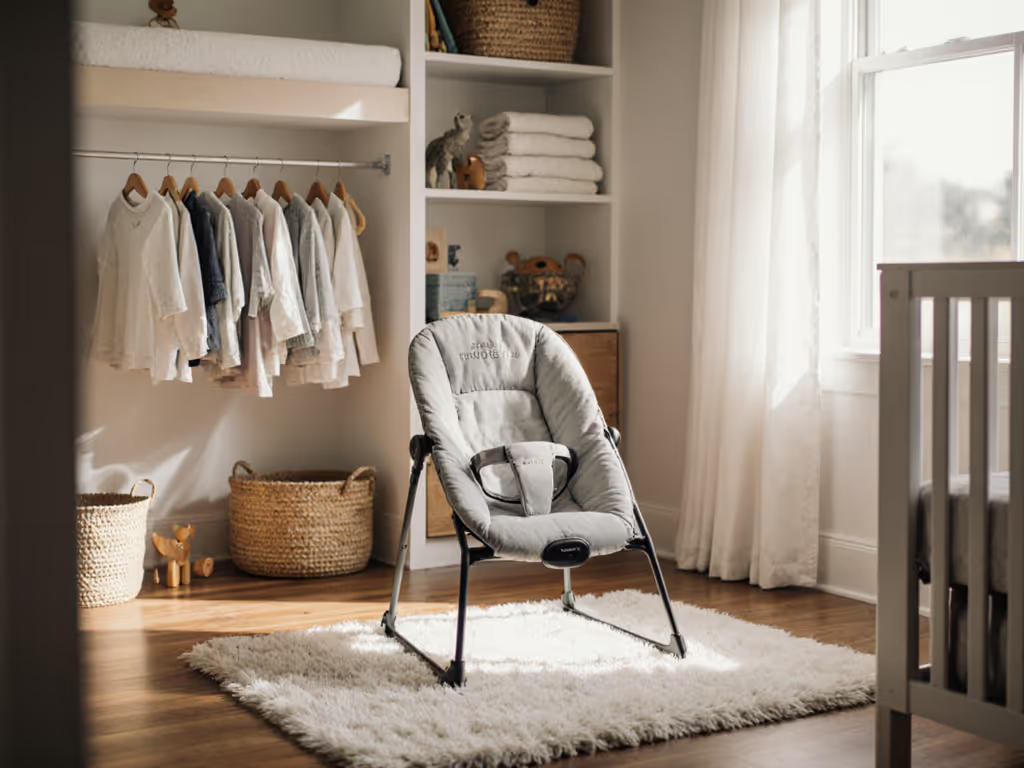
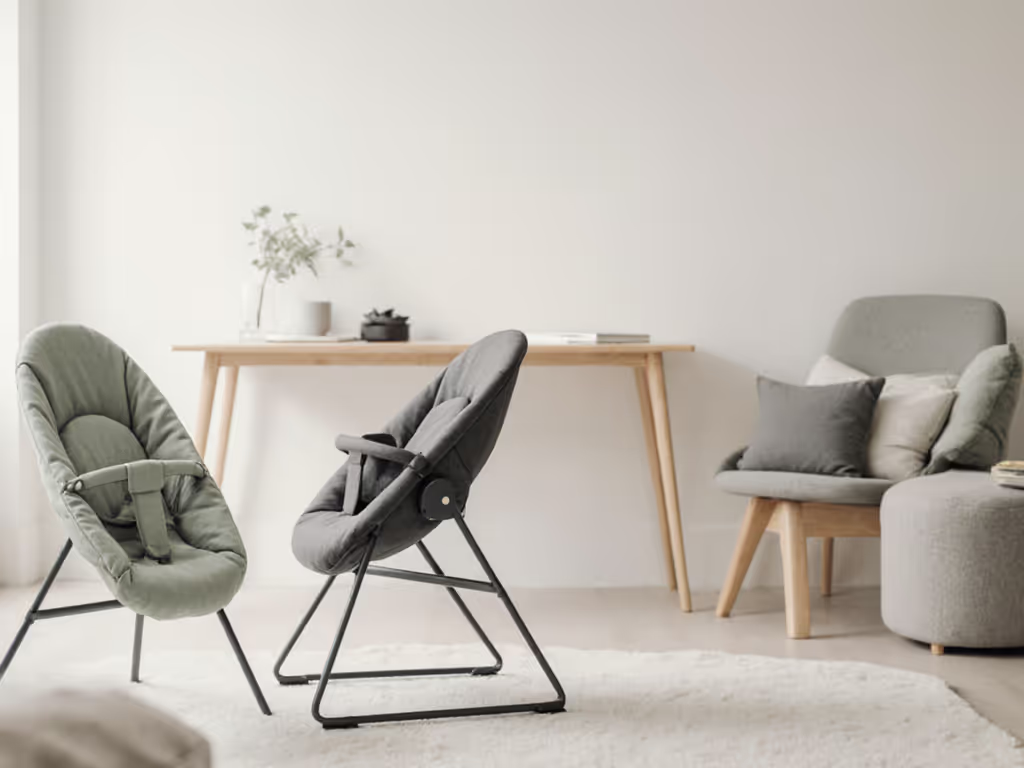
A manual frame rocker with a performance-fabric cover in charcoal or sage integrates into a minimalist office or bedroom within seconds of sitting down. A motorized swing with a white molded-plastic frame, detachable toy bar, and three-position canopy dominates the room even when idle, reading as a piece of baby equipment rather than home furnishing.
Safety and Certification: Non-Negotiable Standards
A bouncer must meet ASTM F2050 (Standard Consumer Safety Specification for Non-Full-Size Baby Bouncers and Rockers) or CPSC compliance in North America. For a full overview of safe setup and daily use, read our complete bouncer safety guide. This ensures:
- Stable base with non-slip feet rated for motion without tipping
- Secure harness (3-point or 5-point options) that resists slipping and fraying
- Breathable, mesh side panels to reduce SIDS risk and allow airflow
- Weight and age limits clearly marked (usually 25-32 lbs, newborn to 12-18 months depending on model)
- Recline angle does not exceed safe thresholds for newborn neck and airway support
Check the product compliance page on the manufacturer's website, not marketing copy. Look for third-party testing certifications (UL, Intertek) rather than manufacturer claims alone. A bouncer labeled "CPSC compliant" without third-party verification is a yellow flag.
Durability of safety features matters across time. A harness that frays after 50 wash cycles, Velcro that loses grip after 6 months, or straps that tear near attachment points are failures that develop over months of use. Request testimonials on how harness durability holds across 18-24 months of daily use, not just first impressions.
Comparative Framework: Bouncer Types Side by Side
Manual Frame Rockers
Footprint: 26-30 inches wide, 18-22 inches deep. Many fold to 14-16 inches deep for storage.
Noise: 48-52 dB (creaks, fabric). No motor or fan noise.
Cleanability: High. Flat frames, minimal crevices, fully removable covers in most models. Wipe-and-go in 3-5 minutes.
Aesthetics: Design-forward options available in neutral fabrics; compact silhouettes resemble modern lounge chairs rather than baby equipment.
Longevity: 18-24 months typical use, depending on frame sturdiness and cover availability. Frame rarely fails if construction is solid.
Cost: $80-180.
Best for: WFH parents, noise-sensitive households, space-constrained homes, parents who prefer manual control and predictable soothing.
Low-Power Motorized Bouncers
Footprint: 30-36 inches wide, 20-24 inches deep. Most do not fold meaningfully.
Noise: 55-62 dB (motor hum, rhythmic bounce). Consistent baseline, rare spikes.
Cleanability: Medium. More crevices around motor housing and harness guides. Wipe frame, removable cover. Clean in 6-10 minutes.
Aesthetics: Bulkier silhouettes; fewer design-forward options. Motors and battery housings add visual complexity.
Longevity: 18-24 months if motor remains quiet; degradation common after 12 months with daily use. Motor noise increases over time.
Cost: $150-350.
Best for: Parents who prefer hands-off soothing; homes with sound insulation; families with storage space; occasional use scenarios where motor reliability matters less. Not sure which motion tech fits your home? Start with our automatic vs manual bouncer comparison.
Multi-Position or Convertible Bouncers (Manual Recline)
Footprint: 28-34 inches wide, 22-26 inches deep. Some recline flat for infant use, then convert to toddler seat or stationary rocker.
Noise: 48-55 dB (all manual operation). No motor-driven features.
Cleanability: High for removable-cover models; minimal crevices if recline mechanism is simple lever-based.
Aesthetics: Variable; top-tier designs mimic modern accent chairs and scale down visually with neutral upholstery.
Longevity: 24-36 months+ if frame and mechanism are durable. Extended age range (newborn to 24+ months) means fewer replacements over time.
Cost: $150-400.
Best for: Families planning multi-year use; investment-focused parents; homes with modest storage for one piece that replaces multiple seats; parents prioritizing design cohesion and quiet operation.
Compact Travel or Portable Bouncers
Footprint: 20-24 inches wide, 16-18 inches deep, under 8 lbs.
Noise: 50-55 dB (minimal moving parts). Nearly silent.
Cleanability: Medium. Removable cover, but narrow frame limits hand access for deep cleaning undercarriage.
Aesthetics: Often minimalist, unadorned designs; neutral colorways common. Lightweight appearance.
Longevity: 12-18 months typical; designed for occasional use, not daily full-time soothing. Fabric and seams show wear faster.
Cost: $60-140.
Best for: Traveling parents, backup seating, occasional use, space-critical households, families with limited budgets.
Real-Life Evaluation: How to Test Before You Buy
-
Measure your space in person. Tape out the footprint on your floor where you plan to use the bouncer. Walk through a typical day: Can you step around it? Stroller access? Cable runs? Does placement block a doorway or window?
-
Request or watch unedited product videos with sound on. Listen to the baseline noise (no music overlay, no edited audio). Imagine this running during a client call.
-
Ask the seller for detailed cleaning instructions and realistic timeline. If they can't tell you how long a wash-and-dry cycle takes, assume it's longer than stated.
-
Check the return window. You need 14-30 days to test in your actual home, your actual noise environment, your actual schedule.
-
Verify weight and one-handed carry capacity. Can you move this between rooms without strain? Up stairs? This matters more than overall compactness if you'll relocate it daily.
-
Confirm harness adjustability and newborn insert availability. A newborn insert and growing room (12-18 months of strap extension) extends your use window and adds value.
-
Test the bouncer during a simulated work call. If background noise or movement visible in your camera becomes distracting, it fails the home-office test.
Final Verdict: Criteria for Your Decision
Choose the aesthetic home office bouncer that satisfies these in priority order:
- Meets footprint constraint (measures and fits your actual storage or placement area)
- Operates at ≤55 dB baseline (manual rocker or low-power motor with minimal squeaks)
- Washable cover, wipeable frame (clean in under 10 minutes with common household supplies)
- Neutral, design-forward aesthetic (integrates into your decor rather than fighting it)
- ASTM F2050 certified (safety, non-negotiable)
- Offers 18-24+ months value (either durability or cost-per-month justifies the investment)
Your ideal bouncer won't be the one with the most features, the best influencer reviews, or the biggest brand name. It will be the one that disappears into your day, quiet enough you stop noticing it's running, compact enough it doesn't consume your mental energy, and designed to serve your life rather than asking your life to accommodate it. This is how calm comes from gear that actually works: by removing friction, not adding it.
Quiet wins: measure, wipe, and fit before you fall.
Related Articles